
- Why did the southern rebellion arise?
- Why did Prime Minister Ibrahim Nasir personally lead an armed expedition?
- How many people died?
- And could restoring national authority ever justify punishing an entire community?
On a day in early 1962, an armed government vessel appeared outside Havaru Thinadhoo, then one of the most prosperous and politically influential islands in southern Maldives.
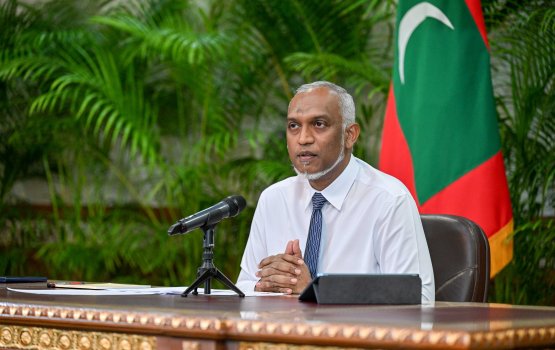
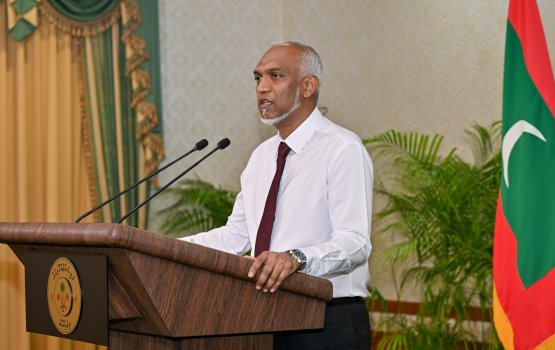
On board was Ibrahim Nasir, the country’s prime minister and the most powerful figure in the government of Sultan Muhammad Fareed Didi. Nasir would not become president until the establishment of the Second Republic in 1968, but he was already directing the government’s response to the separatist movement in the south.
Government forces accompanying him carried rifles and automatic weapons. Warnings were issued for the people of Thinadhoo to surrender, lower the flag of the breakaway United Suvadive Republic and raise the Maldivian flag.
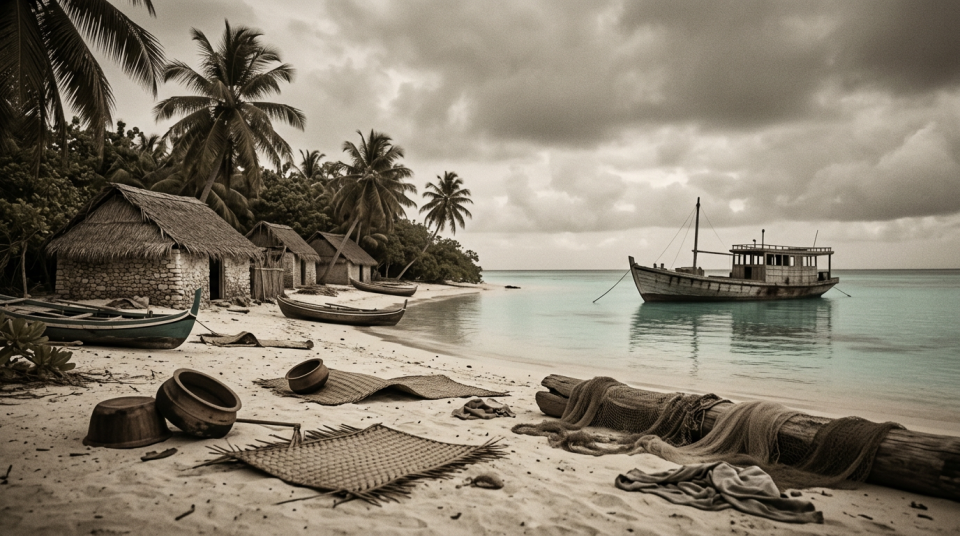
Gunfire followed. Government personnel landed, resistance was overcome and the population was ordered to leave. Houses, boats, wells, trees and commercial property were reportedly destroyed or rendered unusable.
An island community that may have numbered between 4,000 and 6,000 people was dispersed among neighbouring islands. Thinadhoo remained officially uninhabited until resettlement began on 22 August 1966.
The operation restored Malé’s authority over a major Suvadive stronghold. But it also produced one of the darkest and most contested episodes in Maldivian history—an event described variously as the suppression of a rebellion, collective punishment, forced depopulation, a massacre and, by some politicians and descendants, genocide.
The dates themselves remain contested
Many contemporary Maldivian accounts mark 4 February 1962 as the date on which Thinadhoo was depopulated. Recent reporting on the 60th anniversary of the island’s resettlement also uses that date.
More detailed survivor-based narratives state that the government vessel Silver Crest arrived on the afternoon of 30 January 1962, with confrontation, firing, surrender and destruction continuing over several days before the island was declared empty.
These versions may describe different stages of the same operation: the arrival and initial armed confrontation beginning in late January, followed by the completion or official recognition of depopulation in early February.
The absence of a publicly accessible, comprehensive government operational record makes it difficult to establish a minute-by-minute chronology. Any responsible account must therefore acknowledge that the exact sequence remains disputed.
What is not seriously disputed is the central fact: in 1962, forces of the Maldivian state, under Nasir’s authority and with Nasir personally present, ended resistance in Thinadhoo and removed its population.
Why did the southern rebellion begin?
The events cannot be understood without looking beyond Thinadhoo to the political and economic relationship between Malé, the southern atolls and Britain.
At the time, the Maldives was still a British protectorate. Britain controlled the country’s external relations and defence while the Sultan’s government retained authority over internal affairs.
Addu had acquired exceptional strategic importance because Britain operated a military facility on Gan. The base created employment, wages and direct commercial opportunities that were largely unavailable elsewhere in the Maldives.
Southern communities also had a long tradition of maritime commerce. Merchants from Huvadhoo and Addu sailed directly to Ceylon—present-day Sri Lanka—and other Indian Ocean ports, exporting dried fish and importing rice, textiles and consumer goods.
Policies requiring trade to pass through Malé, together with taxes, customs controls, travel documentation and delays in payments, were deeply resented by southern traders. In Huvadhoo, these restrictions were seen not simply as regulation but as an attempt by the central government to take control of an established regional economy.
The physical distance was also significant. Huvadhoo, Fuvahmulah and Addu are separated from the central Maldives by the One-and-a-Half Degree Channel. During an era of slow sea transport and limited communication, the southern atolls often felt economically and administratively removed from Malé.
Political resentment intensified after confrontations between central government officials and residents in Addu. On 3 January 1959, representatives from Addu approached the British authorities at Gan and declared that they no longer accepted Malé’s administration.
On 13 March 1959, Addu, Huvadhoo and Fuvahmulah were proclaimed part of the United Suvadive Republic, an unrecognised breakaway state led by Abdulla Afeef Didi, with Hithadhoo as its capital.
The Suvadive movement therefore emerged from several overlapping causes:
- Opposition to taxation and central control of trade;
- Resentment over the treatment of southern residents by government officials;
- Economic dependence on employment and trade connected to the British base;
- The geographical and political isolation of the southern atolls;
- Local demands for greater autonomy;
- The belief that Britain would protect, tolerate or eventually recognise the new administration.
Britain never formally recognised the United Suvadive Republic. Nevertheless, its presence in Gan gave the movement practical space to operate and created the impression that the British might shield it from Malé.
Thinadhoo’s importance
Thinadhoo was not an incidental participant. It was a commercial centre and one of the most influential islands in Huvadhoo.
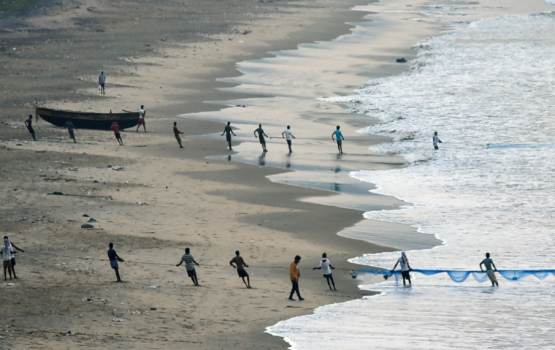
Historical accounts describe an island possessing large oceangoing vessels and an economy built around fishing, boatbuilding and overseas trade. Its wealth, population and strategic position allowed it to serve as a powerful centre of Suvadive authority in the atoll.
Support within Huvadhoo was not uniform, however.
Some islanders opposed the Suvadive movement or feared the consequences of confronting Malé. Accounts from surrounding islands allege that Suvadive supporters intimidated, assaulted or punished people who refused to support separation. Property was reportedly confiscated or damaged during internal confrontations.
This is an important part of the history. Thinadhoo was not simply a peaceful island unexpectedly attacked without any political context. A separatist administration was operating, Malé’s officials had been rejected and resistance existed.
But recognising that context does not establish that every resident—particularly children, elderly people and those who opposed separation—was a combatant or could lawfully be subjected to collective punishment.
An earlier attempt to restore control
The government had already used force in Huvadhoo before the final depopulation.
Historical accounts describe two expeditions led by Nasir against Thinadhoo: an earlier intervention following the initial rebellion and the decisive operation in 1962.
The first intervention did not permanently end Suvadive influence. Separatist authority re-emerged, and Thinadhoo remained capable of resisting the central government.
From Malé’s perspective, this meant that ordinary administrative measures had failed. The issue had developed beyond protests against taxation into a territorial challenge to the authority of the Sultan’s government.
Why did Nasir travel personally?
No surviving public document provides a complete explanation in Nasir’s own words for why he decided to lead the mission personally. Nevertheless, the political circumstances point to several likely considerations.
First, the government regarded the Suvadive movement as a threat to the territorial unity of the Maldives. Three southern atolls had claimed separation, formed a government, adopted a flag and rejected officials appointed from Malé.
Second, Thinadhoo was the principal centre of resistance in Huvadhoo. Recovering it would weaken the breakaway administration and demonstrate that Malé—not the Suvadive leadership or the British presence at Gan—held sovereign authority over the atoll.
Third, communication and command systems were rudimentary. A prime minister leading the expedition could make immediate decisions, negotiate a surrender and prevent uncertainty over who possessed authority to act.
Fourth, Nasir’s personal presence carried symbolic power. If the head of government arrived, lowered the Suvadive flag and restored the national flag, the operation would serve as a visible demonstration of central authority.
Finally, Nasir had built his leadership around a strong, centralised state. A prolonged rebellion could have weakened both his government and the Maldives’ position in negotiations with Britain.
These factors help explain the decision. They do not independently justify the methods employed.
The arrival of the Silver Crest
Survivor-based narratives identify the government vessel as the Silver Crest. One widely repeated account states that it carried government personnel equipped with five rifles and 10 submachine guns.
Thinadhoo residents had reportedly constructed a defensive sand embankment near the harbour. Known as the fasbadi, it was said to be approximately 400 feet long, four feet high and three feet wide.
These measurements and weapon totals originate largely from retrospective local accounts rather than a publicly available military manifest. They should therefore be treated as testimony, not conclusively verified statistics.
According to those narratives, the Silver Crest attempted to intercept dhonis around Thinadhoo. Warning shots were fired, and at least one person was later said to have died after suffering shock.
A captured islander, Zakariya Moosa, was reportedly sent ashore with a message: surrender, lower the Suvadive flag and raise the Maldivian flag in return for clemency.
The demand was initially rejected or prevented from being carried out by hardline Suvadive supporters.
Government forces then fired towards the island. Some accounts describe bullets hitting trees and structures; others report automatic fire into the air and towards positions from which stones were being thrown.
There is no credible evidence presently available showing that Nasir personally handled a weapon and fired it. The defensible historical statement is that armed personnel operating under his command opened fire while he was present and directing the mission.
Accounts indicate that at least one person was directly killed by gunfire and others were injured. Claims of additional deaths from shock, imprisonment, deprivation and displacement have never been consolidated into a verified casualty list.
Surrender; and punishment of an island
After resistance collapsed and the Suvadive flag was lowered, Nasir went ashore.
What followed transformed an operation to restore government authority into an act of collective punishment.
Residents were ordered to leave before a fixed deadline. Soldiers reportedly went through the island enforcing the order. Survivor accounts say men, women, children and elderly residents were made to wait in the shallow lagoon, in some instances with water reaching their necks.
Large trading vessels and smaller boats were burned or destroyed. Houses were demolished or set alight. Wells were damaged or filled with debris. Food supplies, trees and other means of sustaining habitation were reportedly destroyed.
The government’s objective appeared to extend beyond arresting the leaders of the rebellion. Thinadhoo was to be made incapable of immediately supporting a large population or again functioning as a centre of resistance.
Residents sought refuge on other islands in Huvadhoo. Communities receiving them had limited food, housing and sanitation. Families were separated, livelihoods disappeared and displaced people became dependent on relatives or host communities.
Some alleged Suvadive leaders and supporters were arrested. Survivor testimony also contains allegations of torture, sexual violence, mistreatment in custody and deaths under questionable circumstances.
Because no full judicial inquiry was completed at the time, the individual responsibility for many of these alleged abuses remains undetermined.
How many people lived there, and how many died?
The most commonly cited pre-depopulation population estimates range from more than 4,000 to approximately 6,000.
When Thinadhoo was reopened for settlement on 22 August 1966, approximately 1,800 people are commonly reported to have returned.
The difference between the two figures has sometimes been presented as evidence that between 2,200 and 4,000 people died. That conclusion cannot be sustained without individual records.
Not everyone who failed to return had necessarily died. Some displaced residents permanently settled on other islands, migrated, married into host communities or did not immediately return to a devastated island.
Deaths undoubtedly occurred during the violence and in its aftermath. However, the frequently repeated claim that “4,000 people were killed or starved to death” has not been established by a verified list of victims, contemporaneous census reconciliation or completed independent investigation.
A responsible historical report should therefore state:
- Thinadhoo’s population before the evacuation is disputed;
- Approximately 1,800 people reportedly participated in the initial resettlement;
- At least one direct shooting death has been reported;
- Survivors reported further deaths from violence, detention, illness, deprivation and displacement;
- The total number of deaths remains unknown.
Inflating an unverified number does not strengthen the case against collective punishment. It makes historical accountability more vulnerable to challenge.
Was the operation necessary?
Supporters of Nasir argue that the government faced a genuine separatist challenge encouraged by circumstances surrounding the British base.
In their interpretation, Nasir was defending national unity at a time when the Maldives was politically fragile, geographically fragmented and still under British protection. If the southern republic had survived, the Maldives might have been permanently divided.
The operation unquestionably contributed to the collapse of organised resistance in Huvadhoo. The wider Suvadive project ended the following year. Abdulla Afeef Didi left Addu for exile in the Seychelles in September 1963.
Nasir later led negotiations that secured full Maldivian independence from Britain on 26 July 1965. The British Parliament confirmed that Britain would cease responsibility for Maldivian defence and external relations, while retaining agreed facilities in Addu. UK Parliament record
This national-security context explains why Nasir wanted to restore control. It does not answer why the entire civilian population had to be expelled or why homes, wells, boats and livelihoods had to be destroyed after surrender.
Arresting those directing an armed or unlawful separatist administration is fundamentally different from rendering an entire island uninhabitable.
Even judged against the political realities of 1962, the destruction appears designed to deter future resistance by imposing consequences on the whole community.
Four years without a home
Thinadhoo remained officially uninhabited for more than four years.
Resettlement began on 22 August 1966, after Maldives had secured independence. Returnees did not simply go back to their former homes; they returned to an island whose physical and economic foundations had been destroyed.
The reported return of around 1,800 people marked the beginning of rebuilding, but it did not restore lost property, vessels, businesses, records or lives. Nor did it erase the social consequences of dispersal.
The island later became one of the principal urban and economic centres of southern Maldives. It was formally designated a city in 2023.
A state apology, but no final reckoning
For decades, the depopulation received limited treatment in official history. Survivors preserved their accounts within families while political debate often divided into two irreconcilable positions: Nasir as the defender of national unity, or Nasir as the architect of an atrocity.
In 2021, the Thinadhoo Council and private individuals submitted the case to the Office of the Ombudsperson for Transitional Justice.
The office treated it as one of seven cases of national importance selected from hundreds of submissions. Its investigation sought to identify human-rights violations and determine the causes of the operation.
By November 2022, investigators reportedly had testimony from approximately 30 people, including nine who appeared at closed hearings. The office said its investigation had identified human-rights violations and uncovered previously unrecorded accounts. Investigation report
The Transitional Justice Office’s term later expired without a comprehensive final report on Thinadhoo being publicly established as the definitive historical record. In information supplied to a United Nations committee, the government said the office’s files had gone to the Ministry of Finance and were being reviewed by the Attorney General’s Office to determine the way forward.
Former President Ibrahim Mohamed Solih subsequently apologised on behalf of the state, saying the people of Thinadhoo had been treated in a manner no administration should treat its citizens.
An apology is significant, but it is not a substitute for a documented list of victims, disclosure of state records, findings on command responsibility, restoration of property rights or a transparent decision on compensation.
History requires more than choosing a hero or a villain
Ibrahim Nasir remains one of the most consequential leaders in Maldivian history. He helped secure independence, obtained United Nations membership, introduced modern state institutions and oversaw the beginnings of tourism and mechanised fishing.
The same leader also presided over an armed operation that emptied an island and destroyed civilian property.
These facts can coexist.
Understanding why Nasir confronted the Suvadive movement does not require denying the suffering of Thinadhoo. Recognising the separatist rebellion does not make every resident responsible for it. Acknowledging Britain’s strategic role does not remove the Maldivian state’s responsibility for its own conduct.
The central unanswered question is no longer whether the government restored its authority. It did.
The question is whether restoring sovereignty required the destruction of the homes and livelihoods of thousands of Maldivians.
More than 64 years later, the surviving evidence points to a distinction that must not be lost: the government may have had grounds to confront an organised separatist administration, but no persuasive national-security argument has yet explained why an entire civilian community had to be collectively dispossessed.
Until the state opens all surviving records, reconciles the population and casualty figures, records victims by name and publishes a final independent account, Thinadhoo 1962 will remain both a national trauma and an unfinished chapter of Maldivian history.
Editorial note on sources;
This report draws on UK parliamentary and treaty records, published historical research, survivor accounts, Maldivian media archives and reporting on the Office of the Ombudsperson for Transitional Justice.
Certain details—including the precise opening date of the operation, the number and type of weapons, the pre-evacuation population and the total death toll—remain disputed. They have been identified as such rather than presented as conclusively verified facts.