
The United States Federal Reserve's decision to raise interest rates for the first time in more than three years may have been taken thousands of kilometres away in Washington, but its effects could eventually reach Maldivian households through the cost of dollars, imported food and fuel, government debt repayments and borrowing costs faced by businesses.
The Federal Reserve on Wednesday raised its benchmark interest rate by 25 basis points, taking the federal funds target range to 3.75 percent to 4 percent, as it sought a faster return of US inflation towards its two-percent target. The decision was unanimous, while financial markets interpreted the accompanying signals as leaving the door open for additional tightening before the end of the year.
The immediate international reaction was a stronger US dollar and higher short-term Treasury yields. The dollar index rose to a seven-week high on Thursday, while the yield on two-year US Treasury notes moved above 4.7 percent, reflecting expectations that US monetary conditions may remain tight for longer.
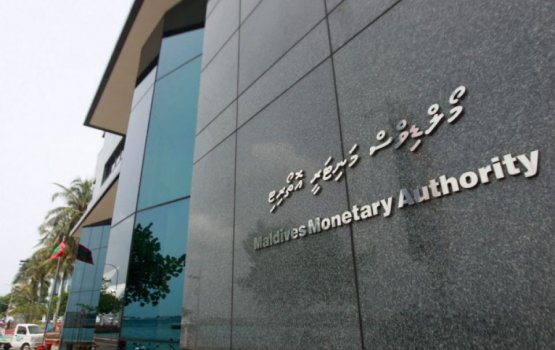
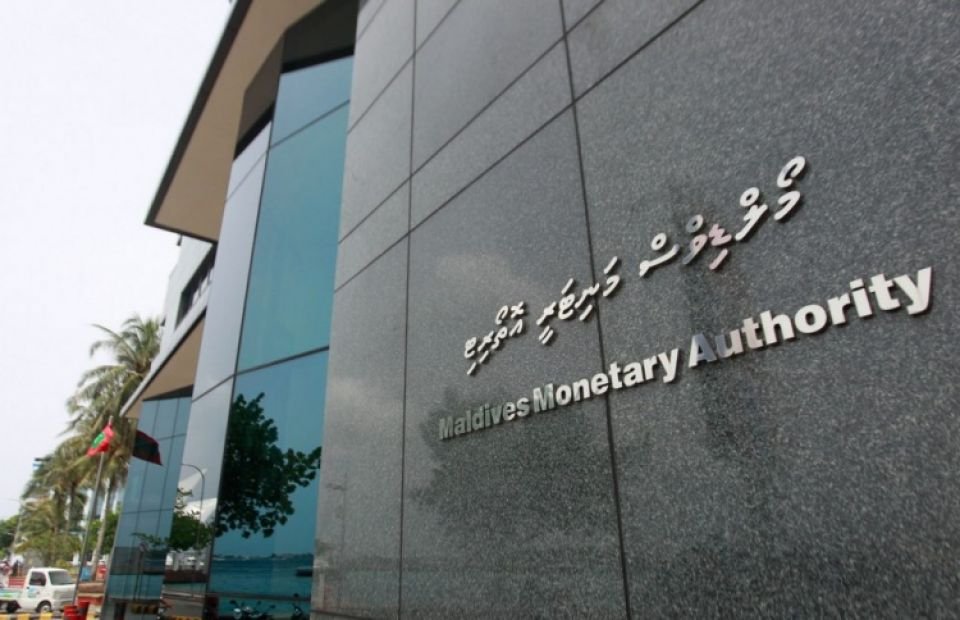
For the Maldives, however, the impact should not be understood as a simple equation in which the Federal Reserve raises its rate and the Maldives Monetary Authority then increases the official price of the US dollar. The MMA reference rate remained MVR 15.42 per dollar at the end of August, broadly where it has remained for years under the country's exchange-rate framework.
The real concern is elsewhere. Maldives is a highly import-dependent economy whose largest industry earns foreign currency, while the government, businesses and state-owned enterprises also carry substantial foreign-currency obligations. This means changes in the global price and availability of dollars can transmit into the economy even when the official MVR/USD exchange rate itself does not move.
The latest Fed decision therefore needs to be viewed through five channels particularly important to the Maldives: the availability of US dollars in the domestic market, the cost of oil and other imported commodities, government external debt servicing, bank and private-sector financing costs, and the movement of the rufiyaa against currencies of major trading and tourism partners such as India, China and Europe.
Behind all five lies a more immediate domestic issue — the continuing difference between the official price of the dollar and the price at which foreign currency has at times been available outside the banking system.
The official dollar remains MVR 15.42 — but that does not explain the whole market
Maldives' dollar problem has increasingly become one of availability rather than the official exchange rate itself.
A dollar bought at the MMA reference rate costs MVR15.42. However, The Press reported on August 24 that an importer seeking foreign currency through the unofficial market had been quoted more than MVR22.60 per dollar, while other reports during August placed the informal price as high as MVR23.
At MVR22.60, the effective premium over MVR15.42 is more than 46 percent.
The practical impact can be seen by considering an importer who needs US$100,000 to settle an overseas invoice. At the official rate, US$100,000 costs about MVR1.542 million. At MVR22.60, it costs MVR2.26 million, a difference of approximately MVR718,000 before freight, duties, rent, salaries and the importer's own margin are taken into account.
For a company requiring US$1 million, the difference increases to MVR7.18 million.
This does not mean every importer buys dollars at the unofficial rate. Companies earning their own foreign currency and businesses obtaining allocations from banks face different circumstances. But it demonstrates why an economy can maintain a stable official exchange rate while businesses simultaneously experience much higher effective foreign-exchange costs.
The situation has changed since the August peak, although the exact current unofficial rate remains difficult to establish independently.
Economic Development, Transport and Trade Minister Mohamed Saeed said on September 14 that information received by the government indicated that unofficial dollar prices had fallen to around, or below, levels seen when the administration assumed office in November 2023. Contemporary reports placed the unofficial rate at around MVR17 to MVR18 at that time.
Atoll Times, however, reported this week that dollars were still being exchanged at around MVR20 in the parallel market, despite the government's statement that rates had fallen further.
Because unofficial foreign-exchange trading above rates permitted by the MMA is now prohibited and there is no authoritative published daily index tracking those transactions, the actual prevailing parallel-market price cannot be independently established in the same way as the official MMA rate.
This distinction is important when analysing the effect of the Fed hike. If sufficient dollars become available through the banking system at regulated rates, a stronger global dollar does not automatically mean a Maldivian importer must pay more rufiyaa for every dollar. If shortages persist, however, an international tightening of dollar liquidity can add pressure to a market that is already sensitive to availability.
Foreign Currency Act aims to pull more tourism dollars into banks
The government has responded to the foreign-exchange shortage by tightening the rules governing how businesses earning dollars convert their revenue.
An amendment to the Foreign Currency Act that came into force on September 1 requires Category A tourism establishments to convert 40 percent of monthly gross sales through the banking system, replacing the earlier option under which establishments could convert US$500 per tourist. Category B establishments are required to convert either US$25 per tourist or 20 percent of monthly gross sales.
Businesses outside tourism earning more than US$25 million annually in foreign currency must also convert 40 percent of monthly gross sales, subject to different provisions for fully Maldivian-owned businesses.
The amendment additionally criminalised selling, attempting to sell or advertising foreign currency above the rate or band determined by the MMA.
These measures are intended to bring more of the foreign currency earned by the tourism industry into domestic banks, where it can be used to meet demand for imports, overseas education, medical expenses, travel and other legitimate transactions.
The timing is significant because Maldives continues to earn several billion dollars annually from tourism. MMA data estimates travel receipts at US$5.57 billion in 2025, while its current estimate for 2026 is around US$5.64 billion.
Yet the availability of foreign currency inside the domestic banking system has remained much tighter than those headline tourism earnings might suggest.
That makes the central question not simply how many dollars Maldives earns, but how much of that foreign currency enters the formal financial system and remains available after payments for imports, debt, overseas services and other external obligations.
Reserves have fallen sharply after major repayments
Maldives entered the latest Fed tightening cycle with significantly less official reserve cover than it had earlier this year.
Official reserve assets stood at US$643.84 million at the end of August, only 0.9 percent higher than in July but 20.5 percent lower than a year earlier, according to MMA figures.
The World Bank said reserves had reached around US$1.3 billion in March before falling to US$717.9 million in April following repayment of the US$500 million sovereign Sukuk and the US$400 million currency swap arrangement with India. At the April level, reserve coverage was equivalent to only around 1.4 months of imports of goods and services.
The decline does not mean Maldives is immediately unable to meet its external obligations. The country successfully settled the Sukuk and other major payments this year, while tourism continues generating substantial foreign-exchange income.
But lower reserves leave less room to absorb another external shock if the import bill rises sharply, tourism receipts weaken or access to external borrowing becomes more expensive.
That is why the Fed's move matters more to Maldives today than it might to an economy with large reserves and limited dependence on imported fuel and food.
Oil above US$100 creates a second pressure at the same time
The Fed hike is also occurring when Maldives is already dealing with unusually high global energy prices.
Brent crude was trading at around US$103.95 per barrel on Thursday, after easing from the previous day's level as additional Saudi supplies reduced some immediate concerns over disruptions in the Middle East. Analysts cited by Reuters said Brent could move back towards US$85-US$95 if tensions ease, but could rise towards US$120 if supply disruptions intensify.
For Maldives, the consequences of a sustained oil price above US$100 are substantial because the country imports virtually all of the petroleum products required for transport, power generation and economic activity.
MMA data show Maldives imported US$709.69 million worth of petroleum products in 2025. Petroleum imports reached US$378.72 million in the second quarter of 2026, an increase of 124.6 percent compared with the same period of the previous year.
The relationship between oil and the Fed is particularly important.
Higher US rates can support the dollar. Oil is internationally priced predominantly in dollars. At the same time, higher oil prices mean Maldives has to find more dollars to purchase the same physical quantity of fuel.
If oil and the dollar strengthen together, Maldives can therefore face two pressures at once: a higher international fuel bill and tighter global financial conditions in the currency required to pay that bill.
The effect also extends far beyond petrol stations. Diesel and other fuels are used for inter-island transportation, fishing, cargo vessels, speedboats, domestic aviation, electricity production, construction and resort operations. An increase in energy costs can consequently move through transport and distribution networks before appearing in the final price of food, construction materials and other goods sold to consumers.
This is one reason international institutions have warned that Maldives remains particularly vulnerable to the conflict in the Middle East. The World Bank expects higher fuel prices and weaker tourism activity to contribute to a sharp deterioration in the country's current account during 2026.
Food prices are where the dollar issue reaches households
The same vulnerability is evident in the food import bill.
Maldives imported US$790.54 million worth of food in 2025, while food imports during the second quarter of this year reached US$190.82 million, 6.3 percent higher than during the same period last year. In July alone, food imports totalled US$69.4 million, up 16.3 percent year-on-year.
The Fed's 25-basis-point increase does not by itself mean food prices in Maldives will suddenly increase. Food prices depend on international commodity prices, shipping costs, supplier currencies, import duties, domestic margins and the availability of dollars through banks.
But the exchange-rate example demonstrates the potential pass-through if an importer cannot obtain enough foreign currency at the official rate.
A US$100,000 food shipment represents MVR1.542 million at MVR15.42. At MVR20, the same invoice requires MVR2 million, while at MVR22.60 it requires MVR2.26 million. The overseas supplier has not changed the invoice in any of those cases; what changes is the amount of local currency required to obtain the dollars.
For consumers whose salaries remain unchanged, increases in food, transport and utility expenses translate directly into weaker purchasing power.
The World Bank estimates that inflation could average 6 percent in 2026 and remain above four percent through 2028 under its current baseline outlook. It has also warned that sustained food-price shocks disproportionately affect lower-income households because food represents a larger share of their total spending.
A MVR20,000 salary does not rise when the import bill rises
The effect on household purchasing power can be understood without complicated economic models.
Consider a household receiving MVR20,000 per month and spending MVR10,000 on food, transport, electricity and other essential consumption.
If the cost of that MVR10,000 basket rises by five percent while household income remains unchanged, an additional MVR500 per month, or MVR6,000 per year, is required simply to maintain the same standard of consumption.
A 10-percent increase would require an additional MVR1,000 every month, equivalent to MVR12,000 over a year.
This does not mean the Fed hike will cause household prices to rise by five or 10 percent. Those figures illustrate how inflation reduces real income. A household may continue receiving exactly the same salary while being able to purchase progressively fewer goods and services with it.
The pressure becomes particularly important in Maldives because imported goods account for such a large part of domestic consumption.
Total merchandise imports amounted to US$3.62 billion in 2025, while imports during the second quarter of 2026 reached US$1.17 billion, 39.1 percent higher than in the corresponding quarter last year.
Even a relatively small change in the effective local-currency cost attached to a multi-billion-dollar import bill can therefore translate into substantial additional expenditure across the economy.
Government debt: 25 basis points sounds small until billions of dollars are involved
The third major channel is public debt.
Central government external debt stood at approximately US$2.39 billion in the second quarter of 2026, while total external debt — including central government debt, publicly guaranteed obligations and external liabilities of commercial banks — stood at about US$3.96 billion.
The World Bank estimates that Maldives faces around US$1.7 billion in external debt-service requirements during 2026, compared with US$630 million last year. Even after repayment of the US$500 million Sukuk and US$400 million currency swap in April, the Bank estimated that approximately US$1 billion of external debt-service requirements remained for the rest of the year.
It is important to distinguish existing debt from new borrowing.
The Fed's 25-basis-point increase does not automatically increase the interest cost on every Maldivian government loan. Fixed-rate loans continue at the agreed rate until maturity, while concessional financing from development partners can operate under entirely different terms.
The pressure is greater when Maldives needs to issue new debt, refinance existing obligations or service borrowing linked to floating international rates.
If the borrowing cost on US$100 million rises by 0.25 percentage point, the additional annual interest expense is US$250,000, equivalent to about MVR3.86 million at MVR15.42.
On US$1 billion, the same 25-basis-point increase represents US$2.5 million, or approximately MVR38.55 million a year.
More importantly, sovereign borrowers such as Maldives do not borrow at the Fed's policy rate itself. International lenders price loans using global benchmark interest rates and then add a risk premium reflecting the borrower's fiscal position, foreign reserves, credit rating and ability to repay.
Therefore, a 25-basis-point Fed hike could have a larger or smaller effect on Maldives' actual financing cost depending on how international investors assess the country at the time it needs to borrow.
Banks and businesses face the same international cost of money
The fourth channel operates through domestic banks and businesses, particularly sectors that borrow in foreign currency.
MMA data show that the weighted average interest rate on foreign-currency private-sector loans stood at 8.3 percent in July, compared with 10.4 percent for rufiyaa-denominated private-sector loans.
Tourism businesses alone had around MVR10.81 billion equivalent in foreign-currency loans outstanding in July, an increase of 7.6 percent compared with a year earlier.
This matters because resort development is capital intensive. New properties, room renovations, desalination systems, renewable-energy installations, vessels, equipment and other major investments can involve borrowing in US dollars.
For a hypothetical US$10 million variable-rate loan, an increase of 0.25 percentage point represents another US$25,000 in annual interest costs. For US$100 million, the increase becomes US$250,000.
Whether a particular Maldivian borrower actually experiences such an increase depends on the structure and benchmark of the loan. Nevertheless, if global dollar financing remains expensive for an extended period, companies may postpone investments, demand higher returns before launching projects or attempt to recover financing expenses through higher prices.
The same pressure can ultimately affect employment, investment and economic growth even if households themselves never borrow in US dollars.
The rufiyaa could strengthen against India, China and Europe while dollars remain scarce at home
The fifth channel appears contradictory but can actually provide Maldives with some relief.
Because the rufiyaa is linked closely to the US dollar, a stronger dollar also means a stronger rufiyaa against currencies that weaken relative to the dollar.
The Indian rupee provides the clearest current example. It weakened beyond INR96 against the dollar on Thursday after the Fed decision before recovering to around INR95.90 per dollar, with traders reporting intervention by the Reserve Bank of India.
At a MVR/USD rate of MVR15.42, a dollar worth INR95.90 implies approximately MVR0.161 for one Indian rupee.
If the Indian rupee weakens further while the MVR remains anchored to the dollar, an item priced directly in Indian rupees can become cheaper in rufiyaa terms even while Maldives is facing a domestic shortage of US dollars.
The same principle applies to the Chinese yuan and the euro. If the dollar appreciates against CNY or EUR, the rufiyaa effectively appreciates against those currencies as well.
This matters because India and China are among Maldives' largest sources of imports, while Europe remains the country's dominant tourism region. MMA figures for 2025 show Europe accounted for 59 percent of tourist arrivals, while China was the largest individual Asian market and India remained an important source market.
However, there is an important limitation on the potential import benefit. International trade is often invoiced in US dollars even when the goods originate in India, China or another country.
If a Chinese supplier continues charging a Maldivian company US$100,000, a weaker yuan does not immediately reduce the Maldivian company's dollar invoice. The currency benefit is greater when contracts are actually denominated in yuan, rupees or euros, or when suppliers lower dollar prices because their own domestic costs have fallen relative to the dollar.
A stronger dollar can also make Maldives more expensive for tourists
The same currency mechanism works in the opposite direction for tourism.
A resort room priced in US dollars becomes more expensive for a European traveller if the euro weakens against the dollar, even when the resort itself does not change the room rate.
Likewise, an Indian traveller must spend more rupees to purchase the same number of dollars when INR weakens.
This creates an unusual situation for Maldives. A strong dollar helps support the rufiyaa against other currencies, but because most tourism prices are quoted in dollars, it can simultaneously make a Maldives holiday more expensive for visitors earning euros, pounds, Indian rupees, yuan and other currencies.
That risk becomes more relevant because tourism receipts have already weakened during part of 2026.
MMA data show travel receipts of US$974.17 million during the second quarter, down 13.4 percent compared with Q2 2025. Its current annual estimate nevertheless places 2026 travel receipts at around US$5.64 billion, slightly above the US$5.57 billion recorded last year.
For Maldives, tourism receipts are not merely an industry performance measure. They are the principal source of the foreign currency needed to finance the country's imports and external payments.
Any prolonged weakening of tourism receipts at the same time as the fuel import bill rises would therefore place pressure on both sides of the foreign-exchange equation.
What does the Fed hike mean over the next two years?
The September decision alone will not determine the direction of the Maldivian economy through 2027 and 2028. The outcome will depend on how long US rates remain elevated, whether the Fed raises rates again, what happens to oil prices, how tourism performs, the success of measures to bring foreign currency into domestic banks and the government's ability to manage its external financing requirements.
The World Bank's latest baseline already reflects a difficult 2026. It expects economic growth to slow to 0.7 percent this year, before rebounding to 6.7 percent in 2027 and moderating to 4 percent in 2028. Inflation is projected at six percent this year and above four percent through 2028.
Those forecasts should not be interpreted as the expected effect of the Fed hike alone. They incorporate tourism disruptions, high fuel prices, fiscal conditions, external financing requirements and other domestic and international developments.
However, the Fed decision can alter some of the assumptions behind that outlook if US rates stay higher for longer.
Under a relatively favourable scenario, Middle East tensions ease, Brent crude returns towards the US$85-US$95 range, US inflation moderates and the Fed eventually begins reducing rates. If the new foreign-currency conversion rules simultaneously increase the supply of dollars through Maldivian banks, pressure on the parallel market could continue to ease, external borrowing conditions could improve and lower energy costs would reduce pressure on food, transport and electricity prices.
Such an environment would give the projected 2027 recovery greater support and allow household purchasing power to improve if wage growth begins to exceed inflation.
A second scenario is one of prolonged pressure rather than crisis. US rates remain close to current levels, international oil stays expensive and domestic dollar availability improves only gradually. Under those conditions, Maldives may be able to maintain the MVR15.42 reference rate while businesses continue facing relatively high borrowing and import costs.
The impact on households would then be gradual rather than sudden. Prices for some food products, transport, construction materials and services could remain elevated while wages adjust more slowly, leaving consumers with less discretionary income even if headline economic growth recovers.
The most difficult scenario would involve high US interest rates and high oil prices occurring together for an extended period.
If Brent returns towards US$120, international dollar financing remains tight and tourism receipts disappoint, Maldives would require more foreign currency to pay for fuel at the same time that government and private-sector financing becomes more expensive. Reserve pressure could increase and, if formal dollar supply failed to keep pace with demand, the incentive for an unofficial foreign-exchange premium could return despite tougher enforcement.
Such a scenario would have the clearest impact on household spending power because fuel, freight, food and financing costs would all be moving in the same direction.
Maldives' real dollar test is no longer just the exchange rate
For many years, discussion about the dollar in Maldives has centred almost entirely around MVR15.42.
That figure remains important, but the experience of 2026 has shown that the official exchange rate alone does not describe the country's foreign-exchange position.
An economy can maintain an official dollar rate of MVR15.42 while the informal price moves above MVR20. It can earn more than US$5 billion from tourism while businesses still report difficulty obtaining foreign currency through the formal system. It can also repay major external obligations while seeing official reserves decline sharply as those repayments are made.
The figures now worth watching are therefore wider than the exchange-rate board at a bank.
Official reserves stood at US$643.84 million in August. Merchandise imports were US$3.62 billion last year. Petroleum imports alone were worth US$709.69 million, food imports another US$790.54 million, while total external debt stood at US$3.96 billion in Q2 2026.
Against those figures, the Fed's 25-basis-point increase may appear small. But the significance of the move is not the quarter of a percentage point in isolation; it is that the increase affects the world's principal reserve and trading currency at a time when Maldives needs large volumes of that currency for fuel, food, debt payments and private investment.
The government is simultaneously attempting to increase the amount of tourism-generated foreign exchange entering domestic banks, while enforcement action is being taken against the unofficial dollar market. Whether those measures produce sustained improvements in dollar availability will become clearer over the coming months.
For Maldivians, the most important question is consequently not whether the MMA changes its official rate tomorrow.
It is whether a household earning MVR20,000, MVR30,000 or MVR40,000 will continue to buy roughly the same amount of food, transport, electricity and other necessities with that income one and two years from now.
The answer will depend on whether Maldives can keep the official peg supported by sufficient foreign-exchange inflows, contain the cost of imported energy and food, refinance external obligations without excessive additional cost and ensure that the billions of dollars generated by tourism circulate through the formal economy.
The Federal Reserve cannot determine any of those outcomes on its own. But by making dollar funding more expensive and strengthening the currency globally, Wednesday's decision has added another pressure to an economic balance Maldives was already working to manage.