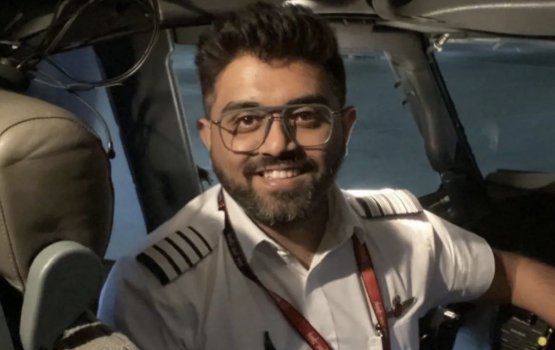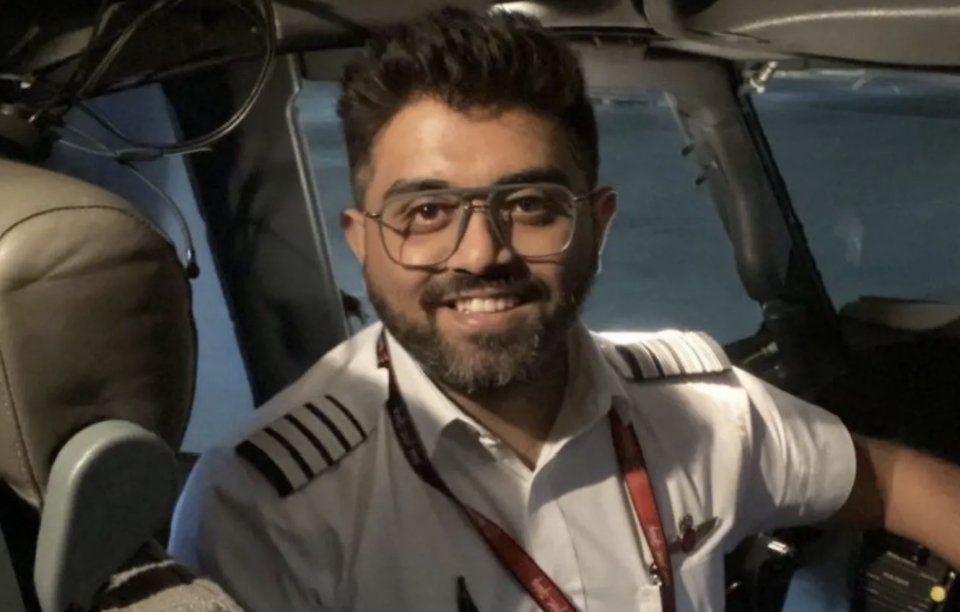
Captain Smit Machchhar was seriously wounded inside the cockpit of a Flydubai flight bound for Tel Aviv. Despite his injuries, officials say the experienced Indian pilot helped prevent what could have become a catastrophic mid-air disaster.
Indian pilot Captain Smit Machchhar has emerged at the centre of an extraordinary aviation emergency after being stabbed inside the cockpit of a Flydubai flight travelling from Dubai to Tel Aviv.
The September 30 incident forced Flydubai flight FZ1073 to divert to Tabuk in north-western Saudi Arabia after a confrontation inside the cockpit sent the aircraft into a sudden descent.
Flydubai confirmed that an incident occurred aboard the flight and said the aircraft was eventually brought back under control and landed safely in Tabuk. All passengers were reported safe.
Machchhar, however, suffered serious injuries.
The Indian captain has since been transferred from Saudi Arabia to the UAE for further treatment. India's Ambassador to the UAE, Deepak Mittal, visited Machchhar and his family in hospital on Thursday and said the pilot was in stable condition and recovering well.
“He was speaking openly, smiling and laughing,” Mittal said, describing the meeting as a major relief for Machchhar's family.
The incident has drawn international attention not only because of what happened inside the cockpit, but because of what Machchhar reportedly managed to do after being seriously injured.
According to accounts from officials and passengers, the other pilot attacked Machchhar during the flight and then allegedly attempted to take control of the aircraft.
Israeli Prime Minister Benjamin Netanyahu said the aircraft began descending after the attack and credited Machchhar, alongside passengers and crew who intervened, with preventing a disaster.
Associated Press reported that the flight was carrying 174 people when the emergency unfolded. Passengers and crew eventually subdued the alleged attacker as control of the aircraft was regained.
A sudden crisis in the cockpit
Flight FZ1073 had departed Dubai International Airport for Israel's Ben Gurion Airport when the emergency developed.
Flight-tracking information and subsequent reports showed the aircraft losing altitude rapidly before an emergency was declared.
The aircraft was ultimately diverted to Tabuk, where it landed safely.
Flydubai has been cautious in its public statements, describing what happened as an incident and later confirming that there had been a confrontation inside the cockpit. The airline said the operating crew succeeded in regaining control of the aircraft before diverting to Saudi Arabia.
Investigations into the attack and its motive remain underway. While Israeli officials have described the episode as an apparent attempt to crash the aircraft, authorities have not yet publicly established a definitive motive.
That distinction remains important as investigators in multiple jurisdictions examine the circumstances surrounding the incident.
From Mumbai to the cockpit
For Machchhar, the events of Wednesday represented an extreme test of more than a decade of aviation experience.
He grew up in Mumbai and travelled to New Zealand in 2008 to train as a pilot at Mainland Air in Dunedin.
He later returned to India and joined SpiceJet, building years of commercial flying experience before moving to Dubai and joining Flydubai in 2022.
Machchhar has accumulated thousands of hours in the cockpit and previously served as a captain with SpiceJet. Reports citing his professional profile put his total flying experience at close to 10,000 hours.
Philip Kean, chief executive of Mainland Air, where Machchhar trained, recalled him as someone capable of remaining composed under pressure.
That training would have covered emergencies ranging from aircraft failures to forced landings. What unfolded aboard FZ1073, however, was far outside the normal scenarios commercial pilots prepare to face.
Former colleagues have also described Machchhar as disciplined and highly professional in the cockpit.
In an earlier podcast interview, he spoke about the seriousness with which he approached flying, saying that once he put on his uniform his attention was entirely on the job.
He also discussed the importance of cockpit discipline, teamwork and learning from senior pilots — experience that would become especially significant during Wednesday's emergency.
“India is proud of Captain Machchhar”
The incident has triggered widespread praise in India.
Prime Minister Narendra Modi said Machchhar demonstrated “immense courage” despite being seriously injured, saying his actions helped save hundreds of lives and avert a major tragedy.
“India is proud of Captain Machchhar,” Modi said while wishing him a speedy recovery.
Modi later returned to the episode while addressing the centenary celebrations of India's Union Public Service Commission, describing Machchhar's actions as an example of extraordinary courage.
The pilot has also received praise from Israeli leaders and former colleagues.
Images, old interviews and clips from Machchhar's appearances on aviation programmes have circulated widely across Indian social media since his identity became public.
For many, however, the defining image of the incident is simpler: an injured pilot attempting to protect his aircraft and its passengers while an emergency unfolded thousands of metres above the ground.
Focus now turns to his recovery
Machchhar's immediate condition appears to have improved.
After receiving emergency medical treatment in Saudi Arabia, he was transferred to the UAE, where Indian diplomatic officials say he is receiving continued medical care and remains in good spirits.
The Indian Embassy says it remains in contact with UAE authorities and Machchhar's family.
Attention will now increasingly turn to how an attack could have taken place inside the cockpit of a commercial passenger aircraft, how control of the aircraft was compromised, and what security or procedural changes may follow.
Those questions will take time to answer.
What is already clear is that flight FZ1073 landed safely despite an extraordinary crisis inside its cockpit — and Captain Smit Machchhar survived to tell the story. (Source: BBC)