
Luxury residences in the Maldives were being marketed to international buyers before Eagle Hills announced its Ras Malé development. A review of publicly accessible developer announcements and property listings shows a market ranging from resort villas held through subleases to multimillion-dollar estates and planned homes on individual private islands.
The evidence provides context for the debate over long-term residential rights at Ras Malé. It also reveals why comparisons need care: an advertised lease term is not proof of a registered lease, a residence offered for sale is not evidence of a completed transaction, and different projects can give buyers materially different rights.
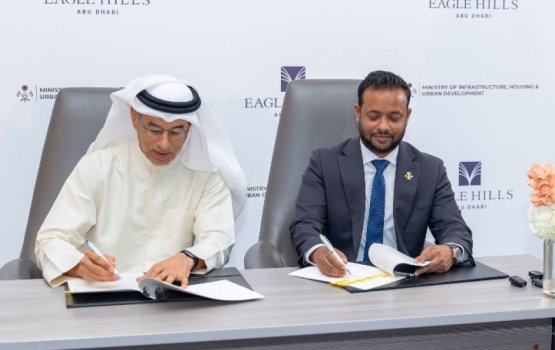
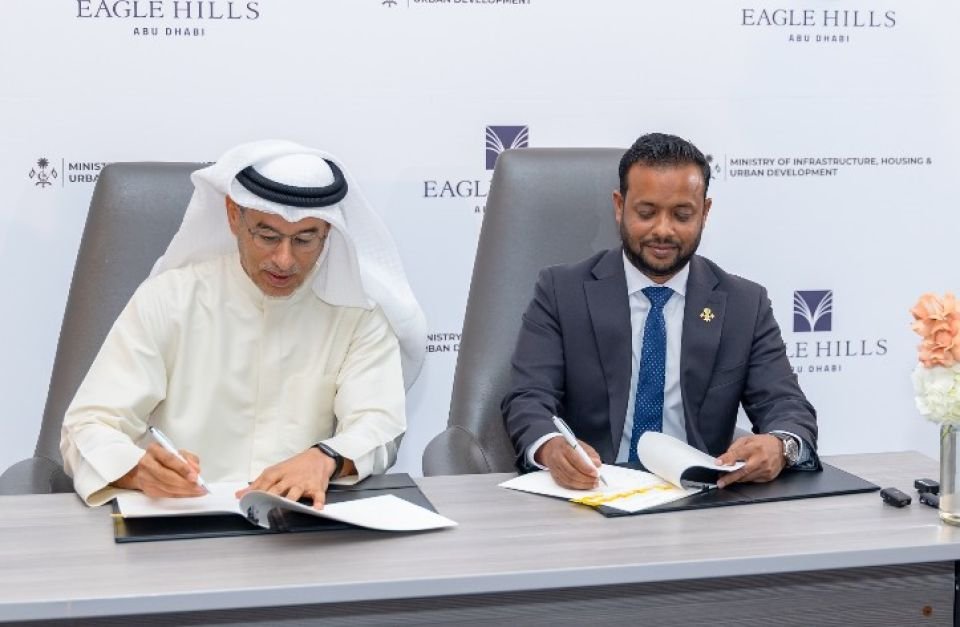
Eagle Hills’ announcement, dated September 21, 2026, says properties at Maldives Waterfront and Marina will be offered through leasehold arrangements of up to 99 years. It describes those interests as transferable and inheritable, with every transfer requiring government approval and registration. The company also says the agreement establishes principal commercial terms, with detailed terms still to be developed.
The distinction between land and residential rights
The constitutional boundary is clear in the President’s Office announcement of the Fourth Amendment, ratified on April 23, 2019. Article 251(a) prohibits foreign ownership of any part of Maldivian territory, while Article 251(b) prohibits granting a foreign party a lease or other territorial interest exceeding 99 years.
That distinction matters when developments use terms such as “ownership” or “strata title.” Those descriptions should not be read as proof that a foreign purchaser receives permanent ownership of the underlying land. The duration and scope of the purchaser’s rights require examination of the relevant legal documents. Nor does the constitutional maximum, by itself, establish that any particular arrangement meets every applicable legal requirement.
Soneva Fushi illustrates the resort-residence model. Property agency Sphere Estates describes villa ownership there as a sublease lasting for the duration of the island’s lease between Soneva Fushi and the Maldivian Government. Its listing identifies separate lease, management and rental agreements governing the buyer’s interest and the operation of the villa.
The agency’s page contains historical lease figures, so it should not be used to establish how many years remain today. What it documents is the marketed structure: a residence whose tenure depends on the resort’s underlying government lease.
Where 99 years is being advertised
SAMANA Ocean Views offers a more direct comparison with the length of tenure proposed at Ras Malé. SAMANA’s official website places the development on Haa Alif Medhafushi, an island covering 11.74 hectares, and identifies accommodation including beach villas, water villas and two-bedroom suites.
A Maldives Investments sales listing for the project advertises a 99-year leasehold and a starting price of US$2.35 million. Although the page is headed as a two-bedroom water-villa listing, its description covers several residence types. The starting price is therefore best reported as the listing’s advertised minimum, rather than a confirmed price for a particular villa category.
This establishes that a 99-year residential leasehold is being marketed for another Maldives development. It does not independently establish the wording of SAMANA’s registered island lease or an executed buyer agreement. Those documents have not been reviewed for this report.
A market extending into tens of millions
At Zamani Islands in South Malé Atoll, the developer’s website lists a four-bedroom Mansion at US$17.499 million and an eight-bedroom Grande Estate at US$45.129 million under single-payment options. Buyers choosing milestone payments face higher listed totals of US$19 million and US$49.4 million respectively.
At a conversion rate of MVR15.42 per US dollar, the Grande Estate’s single-payment price equals approximately MVR695.9 million. These are advertised prices, rather than independently verified transaction values. Zamani describes its residences as strata-title properties, but the cited website does not establish a 99-year purchaser lease.
Baccarat Hotel & Residences Maldives demonstrates a different advertised tenure. Starwood’s March 18, 2024 announcement sets out plans for more than 50 hotel villas and 53 private residences for sale across five interconnected islands in South Malé Atoll. It identifies Madevco Holdings Limited as project owner and MDC Investments LLC as a sister company involved in development.
Sphere Estates states that purchasers’ initial leasehold interests align with the underlying lease held by Moonlight Holdings Private Limited, which expires in 2065. The listing still describes the initial term as approximately 41 years, a figure that should not be treated as current in 2026. Its more useful disclosure is the expiry year.
The agency says buyers would receive an additional 49 years if the developer extends the resort lease, without an additional charge to the residence owner. That is a conditional extension described in sales material, rather than evidence that the extension has already taken effect.
Coral Residences at Kandima was announced to local and international buyers in a developer release dated November 19, 2025. Pulse Hotels & Resorts described 40 two- and three-bedroom apartments, with pre-launch prices starting at US$1.2 million. That figure is an announced launch price; the release does not establish today’s available inventory or the purchaser’s lease duration.
Other brands are proposing residences with greater physical separation. Aman says its forthcoming Amanolu development in Vaavu Atoll will include five-bedroom homes, each on an individual private island. Nobu’s planned development at Munyafushi in Laamu Atoll includes 10 Island Estate Residences, also on separate private islands. Neither cited announcement establishes a 99-year purchaser lease.
What the precedents establish — and what remains unresolved
Ras Malé is presented as an integrated destination combining residences and hospitality with a marina, retail, education, healthcare and community facilities. That urban mix distinguishes the proposal from the resort-based products examined here, although it does not make their contractual structures directly comparable.
One unresolved issue concerns transfers. The National and Gulf News reported at the announcement that a fresh term of up to 99 years would begin when a property changed hands through sale or inheritance. Eagle Hills’ currently accessible announcement states the approval and registration requirements but does not contain that fresh-term wording.
The distinction has practical consequences. A buyer taking over an existing lease might receive its remaining years; a newly granted lease could carry a different expiry date. The published accounts do not resolve which mechanism will apply, and should not be treated as a substitute for the detailed agreements.
The evidence supports a narrower conclusion than claims that every development follows the same model: residential leasehold and sublease products were marketed in the Maldives before the Eagle Hills announcement, and a separate project currently advertises 99-year tenure. Establishing Ras Malé’s precise legal and commercial position requires the detailed lease and purchaser documents, including provisions on transfers, extensions, expiry and the benefits accruing to the State.