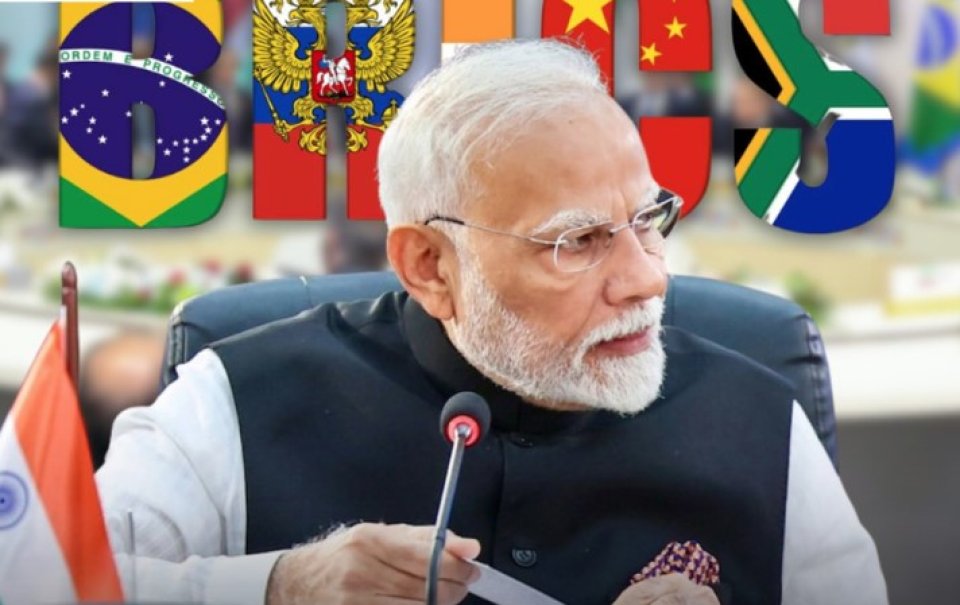
NEW DELHI — India is seeking to use its 2026 BRICS presidency to strengthen cooperation among emerging economies, advance reforms in global governance and promote sustainable development at a time of growing geopolitical and economic uncertainty.
India assumed the rotating presidency of BRICS on January 1 and will host the 18th BRICS Summit in New Delhi. The 17th summit was held in Rio de Janeiro, Brazil, in July 2025.
India’s presidency is being held under the theme, “Building for Resilience, Innovation, Cooperation and Sustainability,” reflecting what New Delhi describes as a “humanity-first” and “people-centred” approach.
The presidency comes as developing economies seek greater influence over international decision-making amid intensifying competition among major powers, disruptions to global supply chains and mounting pressure to reform multilateral institutions.
Indian officials have said New Delhi intends to pursue a constructive agenda that supports economic growth, technological innovation, sustainable development and greater representation for the Global South.
BRICS now comprises 11 major emerging and developing economies: Brazil, Russia, India, China, South Africa, Egypt, Ethiopia, Iran, the United Arab Emirates, Indonesia and Saudi Arabia.
The group collectively represents a significant proportion of the world’s population, economic output, manufacturing capacity, energy resources and critical minerals. Its growing membership has also increased its influence in discussions on trade, development financing, climate change, health, energy security and reform of global institutions.
India is expected to focus on maintaining consensus within the expanded grouping, whose members have different political systems, economic priorities and strategic interests.
New Delhi has previously chaired BRICS in 2012, 2016 and 2021. During those presidencies, the group expanded cooperation in agriculture, trade, investment, technology, innovation, green energy, climate action, disaster response and cultural exchanges.
India has also supported a decision-making model based on consensus, presenting BRICS as a platform for practical cooperation rather than a formal geopolitical alliance directed against other blocs.
Under its 2026 presidency, India is expected to place particular emphasis on strengthening resilience against financial shocks, public health emergencies, natural disasters and disruptions to supply chains.
Innovation is another major priority, with greater cooperation anticipated in emerging technologies, digital public infrastructure, research, entrepreneurship and capacity-building.
The sustainability pillar is expected to cover climate action, clean energy, responsible management of natural resources and development of economies capable of withstanding environmental and economic pressures.
India’s BRICS agenda is also closely linked to its expanding diplomatic and security role in the Indian Ocean.
Prime Minister Narendra Modi introduced the SAGAR vision—Security and Growth for All in the Region—during a visit to Mauritius in 2015.
The policy recognises the Indian Ocean as critical to global trade, energy transportation and regional economic security. It calls for the protection of maritime routes, stronger cooperation with coastal and island states, collective responses to regional threats and the sustainable use of marine resources.
Under SAGAR, India has worked with Indian Ocean countries in maritime surveillance, hydrography, training, search-and-rescue operations, disaster relief and the protection of exclusive economic zones.
The policy carries particular importance for island nations such as the Maldives, whose economies, food and energy supplies, tourism industries and national security depend heavily on safe and stable sea routes.
The Indian Navy has emerged as a key instrument of the initiative, increasing joint exercises, coordinated patrols, training programmes and humanitarian deployments across the Indian Ocean.
India has also supplied equipment and helped partner countries strengthen their ability to respond to piracy, illegal fishing, trafficking, natural disasters and other maritime emergencies.
In March 2025, Modi announced an expanded regional vision known as MAHASAGAR—Mutual and Holistic Advancement for Security and Growth Across Regions.
While SAGAR primarily focused on the Indian Ocean, MAHASAGAR broadens India’s approach to include deeper economic, technological and security cooperation with countries across the Global South.
The initiative seeks to connect maritime security with development partnerships, digital connectivity, technology sharing, capacity-building and sustainable economic growth.
India has maintained that its development assistance will be determined by the priorities of partner countries.
Addressing the Ugandan Parliament in 2018, Modi said India’s development partnerships would be guided by the priorities of recipient countries and delivered on terms that would help unlock their potential without constraining their future.
India has since promoted capacity-building, professional training, grants, concessional financing, infrastructure development and digital public services as central elements of its engagement with developing countries.
However, India’s BRICS presidency is also likely to face challenges.
The expansion of the grouping has strengthened its global reach but made consensus more difficult. Member states hold differing positions on international conflicts, trade policies, financial systems and relations with Western powers.
India will therefore be required to balance these differences while maintaining BRICS as an effective platform for cooperation.
Areas in which practical progress is considered possible include development financing, food and energy security, public health, climate resilience, artificial intelligence, digital infrastructure, maritime safety and disaster response.
Reform of international institutions is also expected to remain high on the agenda. BRICS members have repeatedly called for developing countries to receive greater representation in institutions including the United Nations, the International Monetary Fund and the World Bank.
India’s position across multiple international groupings may help it navigate these divisions. New Delhi is a member of BRICS and the G20 while also participating in the Quad and maintaining strategic relationships with countries across the West, the Global South and the Indo-Pacific.
This allows India to present itself as a bridge between developed and developing economies while preserving its policy of strategic autonomy.
The success of India’s presidency will ultimately depend on whether the 18th BRICS Summit produces measurable initiatives rather than broad political declarations.
For New Delhi, the summit represents an opportunity to demonstrate that an expanded BRICS can remain cohesive, respond to the priorities of developing countries and deliver practical cooperation in an increasingly divided international environment.
This article is based on an analysis contributed by Professor Govender, an academic and observer of international relations.