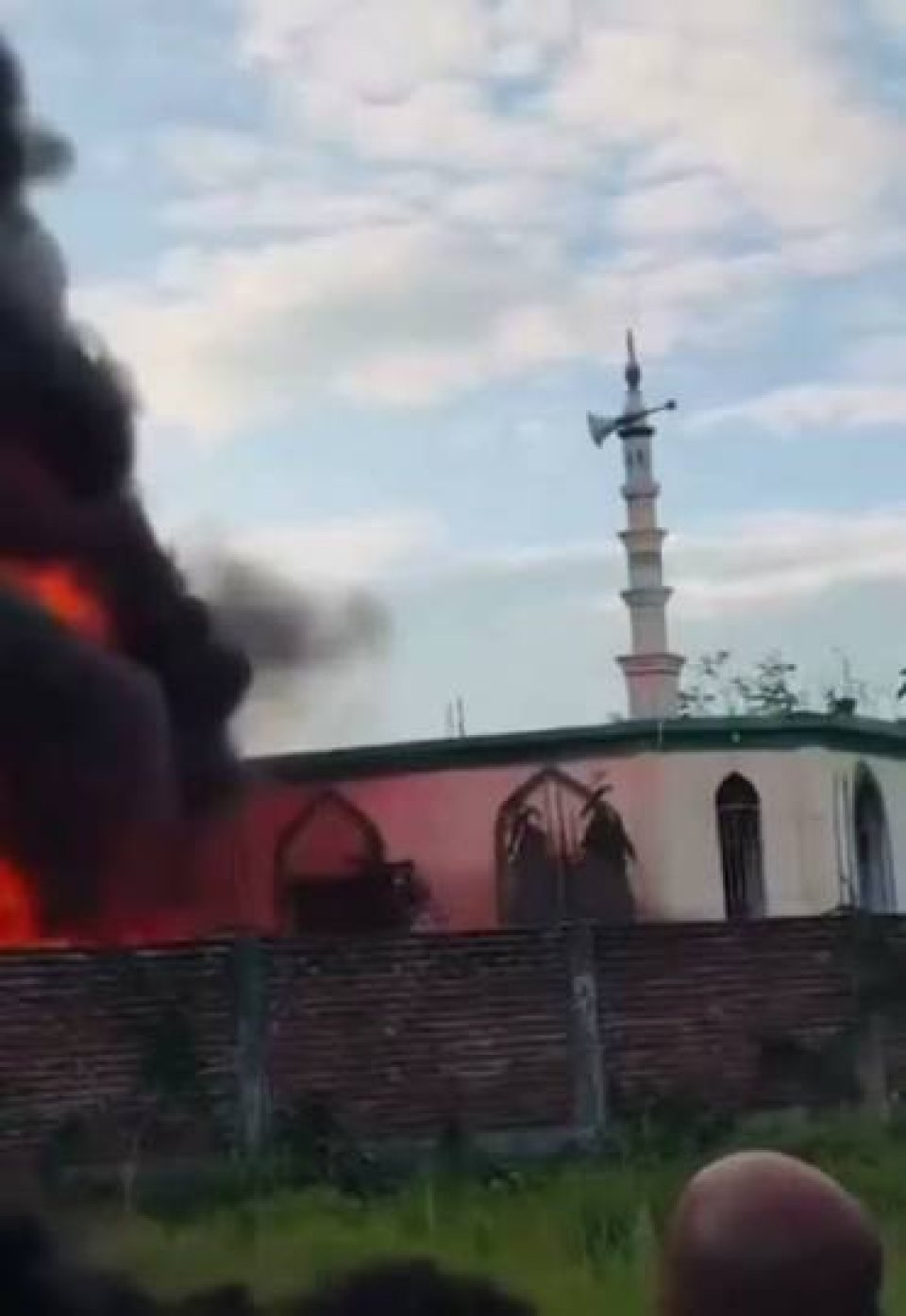

KATHMANDU — A mosque in southeastern Nepal was vandalised and set ablaze during Hindu-Muslim communal unrest in late July, destroying copies of the Holy Quran, Hadith and other religious materials kept inside.
The religious site has been identified as the Chauharwa Jame Mosque in Golbazar, a municipality in Nepal’s Siraha district.
The attack took place during violence on July 30, although detailed reports and photographs documenting the destruction were published in early August.
Khabarhub, citing local authorities, reported that the mosque was vandalised and set on fire during a protest, causing extensive damage to the building and destroying books kept inside.
A separate photographic report published by Nepal News showed the aftermath of the arson and confirmed that copies of the Quran and Hadith were lost in the fire.
The violence in Golbazar followed communal clashes that began on July 26 in Dewanganj, Sunsari district, before spreading into parts of Nepal’s Madhesh Province.
Reuters reported that the initial confrontation involved Hindu and Muslim groups and began after a dispute over loud music and religious flags during a Hindu event. At least 25 people were injured in the original clashes.
Two people were killed in Sunsari, while a third death was recorded in Siraha on July 30 as protests and sporadic violence continued.
The Siraha victim was identified as 15-year-old Ganesh Yadav, who was shot during unrest in Golbazar. Investigators had not immediately established who fired the fatal bullet.
Following news of the teenager’s death, angry crowds spread through different parts of Golbazar. Homes, shops, vehicles, commercial buildings and religious sites were vandalised or set on fire.
Police later estimated that 64 properties and structures were damaged during the unrest, including 15 private homes, 18 shops and businesses, 28 vehicles, and several religious and educational facilities.
Some regional and Muslim media outlets described the attack on the mosque as having been carried out by members of a Hindu nationalist crowd. Videos circulating online also appeared to show religious slogans being chanted during attacks on Muslim-owned properties.
However, reports citing Nepalese authorities have not publicly identified every person or organisation responsible for the mosque attack. The incident should therefore be described as an alleged attack by Hindu nationalist protesters, or more cautiously as an arson attack committed during Hindu-Muslim communal unrest.
Authorities imposed curfews across several affected towns, deployed additional security personnel and announced an investigation into the violence. Nepalese political, religious and community leaders later organised peace initiatives calling for restraint and communal harmony.
Catastrophic floods struck 27 days later
On August 26—27 days after the Golbazar violence—a catastrophic flash flood swept through Nepal’s Bhote Koshi and Trishuli river systems.
Nepal’s Ministry of Home Affairs said the flood entered Rasuwa district at approximately 8:40 am before severely affecting downstream communities in Rasuwa, Nuwakot, Dhading, Gorkha and other districts.
Satellite imagery and scientific assessments examined by Reuters indicated that the lower section of a glacier near Langtang Lirung collapsed, sending an avalanche of ice, rock and debris down the valley.
The resulting debris flow travelled through the Lhende Khola and generated powerful flash floods that destroyed villages, roads, bridges, power projects and border infrastructure.
By Friday, Nepal’s disaster authorities had reported hundreds of deaths, while large numbers of people remained missing and rescue operations continued across the affected river corridor.
The mosque attack and the flash-flood disaster are separate events that occurred in different parts of Nepal. While the arson preceded the floods, no official, scientific or credible journalistic source has established any causal connection between them.
Social-media posts presenting the floods as punishment for the mosque attack are therefore interpretations rather than verified news. The available evidence establishes only the chronology: the Chauharwa Jame Mosque was torched during communal unrest on July 30, and the glacier-triggered floods struck Nepal on August 26.
(Sources: Reuters, Khabarhub, Nepal News, OnlineKhabar and Nepal’s Ministry of Home Affairs)