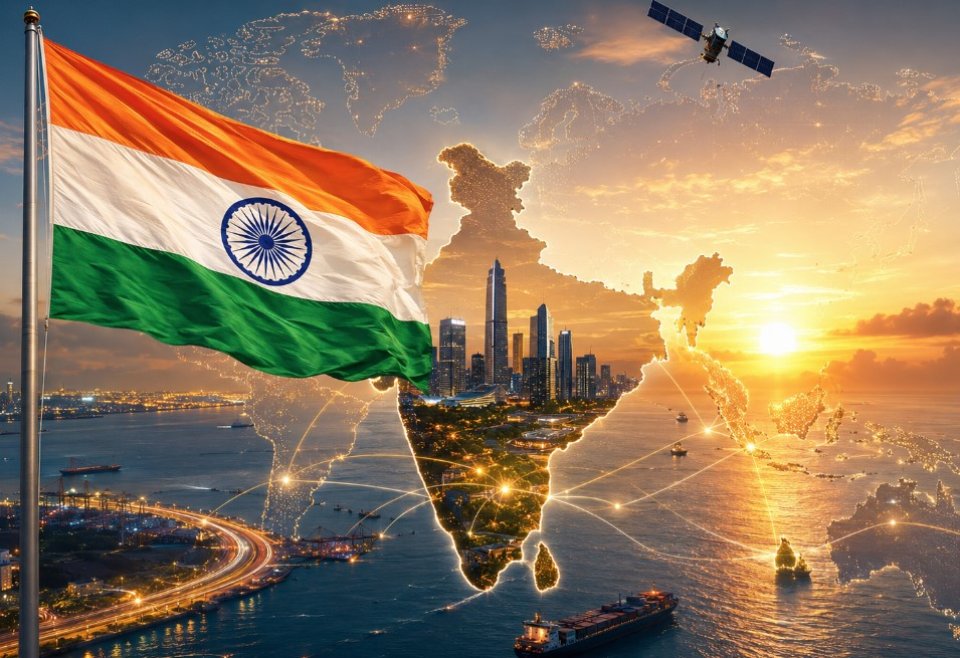

When India gained independence on August 15, 1947, it inherited an economy weakened by colonial rule, widespread poverty, low literacy and immense social and administrative challenges.
Seventy-nine years later, as India celebrates its 80th Independence Day, the transformation is remarkable.
The IMF projects India’s nominal GDP at approximately $4.15 trillion in 2026, the world’s most populous nation, a nuclear power, a major centre of technology and innovation, and an increasingly important participant in decisions affecting global trade, security and development.
India’s rise is especially significant because it has largely been achieved while preserving democratic institutions, political pluralism and the extraordinary diversity of a nation with hundreds of languages, cultures and communities.
India is no longer merely responding to decisions made by established global powers. It is increasingly helping to shape them.
From a struggling economy to a global growth engine
The most visible measure of India’s progress is its economic transformation.
The International Monetary Fund estimated India’s nominal gross domestic product at approximately $4.15 trillion in 2026, placing it among the world’s largest economies. India also remains one of the fastest-growing major economies, with the IMF projecting strong growth through 2026 and 2027. IMF World Economic Outlook
This growth is supported by a vast domestic market. India’s population was estimated at approximately 1.464 billion in 2025, with nearly 68.7 percent falling within the working-age group of 15 to 64. This gives India an enormous base of workers, entrepreneurs, consumers and innovators. UNFPA population data
India now trades with more than 217 international partners, while Indian companies play important roles in information technology, pharmaceuticals, telecommunications, automobiles, financial services, renewable energy, space exploration and advanced manufacturing. Indian Department of Commerce
The country has also become a global example of digital transformation. India’s Unified Payments Interface has made instant electronic transactions available to hundreds of millions of people. Its wider digital public infrastructure has connected citizens to banking, identity and government services on a scale rarely attempted elsewhere.
India’s economic influence will continue to expand as global companies diversify supply chains and seek manufacturing and technology partners beyond traditional production centres.
The World Bank estimates that India will need average growth of approximately 7.8 percent over the coming two decades to achieve its ambition of becoming a high-income economy by 2047. This is an ambitious target, but the scale of India’s progress since independence demonstrates its ability to overcome seemingly impossible challenges. World Bank assessment
A respected and independent global voice
India’s growing influence is also rooted in its ability to maintain constructive relations with countries that often disagree with one another.
India works closely with the United States, Japan and Australia through the Quad. At the same time, it remains active in BRICS, maintains longstanding relations with Russia, expands cooperation with Europe and engages closely with the Gulf states, Iran, Africa and Southeast Asia.
This approach is commonly described as strategic autonomy.
Rather than becoming dependent on a single global bloc, India makes decisions according to its national interests and the wider interests of developing countries. This diplomatic independence gives New Delhi the ability to communicate with competing centres of power.
India can speak to Washington and Moscow, engage with Israel and Palestine, maintain relations with Iran and the Arab world, and cooperate with Western economies while continuing to advocate the priorities of the Global South.
In an increasingly divided international environment, this ability is a diplomatic strength.
India does not seek influence through confrontation. Its approach has generally been to build partnerships, maintain dialogue and protect its freedom to make independent decisions. This gives India credibility among many developing nations that do not wish to be forced to choose between rival global powers.
Giving the Global South a stronger voice
India has emerged as one of the leading advocates for reforming international institutions to reflect contemporary economic and demographic realities.
Its presidency of the G20 in 2023 demonstrated this ambition. India successfully supported the African Union’s admission as a permanent member of the grouping, giving African countries a stronger institutional voice in discussions involving the world’s largest economies.
India has also called for reform of the United Nations Security Council and other international organisations created under political conditions that existed after the Second World War.
With around 18 percent of the world’s population, one of its largest economies, significant military and technological capabilities and a distinguished history of participation in UN peacekeeping, India has a compelling case for permanent membership of a reformed Security Council.
India’s international message is increasingly clear: global rules cannot remain credible if the countries and populations of the Global South are inadequately represented in the institutions that make those rules.
A dependable partner to its neighbours
India’s global influence begins with its immediate neighbourhood.
Through its Neighbourhood First policy, India has supported infrastructure, health, education, financial stability, disaster response and human-resource development across Bangladesh, Bhutan, Maldives, Mauritius, Nepal, Seychelles and Sri Lanka.
India’s Ministry of External Affairs says its assistance within the neighbourhood has included more than $7.5 billion in concessional loans and currency arrangements, in addition to nearly $850 million in grants. Ministry of External Affairs
India’s response during Sri Lanka’s economic crisis demonstrated the practical value of this policy. When Sri Lanka faced severe shortages of fuel, food and foreign currency in 2022, India extended assistance worth approximately $4 billion, becoming one of the country’s most important sources of emergency support.
India has similarly responded during natural disasters and emergencies in Nepal, Bangladesh, Myanmar and across the Indian Ocean. Its geographical proximity, logistics capacity and political willingness often enable it to become one of the first countries to provide assistance.
For smaller neighbouring states, India is not simply a major global economy. It is frequently the partner capable of responding most quickly when a crisis occurs.
A partnership that matters to Maldives
The India–Maldives relationship illustrates how New Delhi’s regional engagement can directly support the development and economic stability of a neighbouring country.
Indian assistance to Maldives has supported housing, roads, bridges, water and sewerage networks, healthcare facilities, community projects, capacity-building programmes and maritime security.
The $500-million Greater Malé Connectivity Project, financed through a combination of an Indian grant and concessional credit, is the largest infrastructure project undertaken in Maldives. India also extended an $800-million Line of Credit to finance development projects across the country.
When Maldives experienced foreign-exchange pressures, India offered a currency-swap arrangement consisting of a $400-million facility and an INR 30-billion facility. This provided valuable support to the country’s external financial position. India–Maldives briefing
The relationship also extends beyond major infrastructure. India has supported numerous High Impact Community Development Projects in Maldivian islands, responding to needs identified at the community level.
For Maldives, India’s proximity, medical facilities, education opportunities, economic capacity and ability to provide immediate assistance make it an indispensable development and security partner.
A constructive role in international conflicts
India has consistently advocated dialogue and diplomacy as the most sustainable means of resolving international disputes.
On the Russia–Ukraine conflict, India has maintained communication with both Moscow and Kyiv while calling for peace and respect for diplomacy. Prime Minister Narendra Modi’s message that “today’s era must not be of war” became one of India’s most widely recognised statements on the conflict.
India’s ability to engage both sides gives it diplomatic space that many countries do not possess. While India may not act as a traditional mediator in every conflict, it can transmit concerns, encourage dialogue and support conditions for future negotiations.
In the Middle East, India has maintained strong relations with Israel while continuing to support Palestinian statehood and a negotiated two-state solution. Its close ties with Israel, Palestine, the Gulf states and Iran provide it with a broad diplomatic network across the region.
India’s contribution to global peace is also visible through its longstanding participation in United Nations peacekeeping. Indian troops, police officers, doctors and engineers have served in difficult missions across Africa, Asia and the Middle East.
Alongside peacekeeping, India has contributed through humanitarian assistance, anti-piracy operations, disaster relief, medical support and evacuations of both Indian and foreign citizens from conflict zones.
Its role is therefore not limited to making statements. India has repeatedly demonstrated the capacity to place personnel, resources and logistical support on the ground when international emergencies occur.
Securing the Indian Ocean
India’s strategic importance is inseparable from the Indian Ocean.
The ocean carries major energy supplies and trade flows connecting Asia, Africa, Europe and the Middle East. Any serious disruption to these routes would affect economies far beyond the region.
As per SIPRI, India’s military expenditure was estimated at $86.1 billion in 2024, making it the world’s fifth-largest military spender. SIPRI military expenditure report
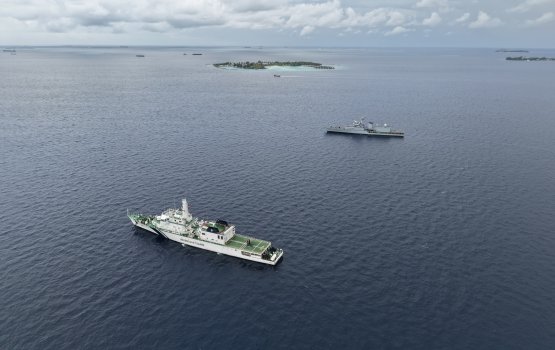
However, India’s regional security role extends well beyond conventional military power. It includes maritime-domain awareness, coastguard training, hydrographic surveys, anti-piracy patrols, search-and-rescue operations and humanitarian assistance following natural disasters.
For island nations such as Maldives, Mauritius, Seychelles and Sri Lanka, these capabilities contribute directly to the safety of territorial waters, shipping routes and maritime resources.
India’s approach of promoting security and growth for all in the region recognises that the Indian Ocean cannot be kept secure by one country alone. Stability requires cooperation among coastal and island states.
India’s next chapter
India’s trajectory suggests that its economic and diplomatic influence will continue to expand.
Its enormous market, young workforce, technological capacity and central position in the Indian Ocean give it advantages that few countries possess. Continued investment in manufacturing, infrastructure, renewable energy, education, digital services and defence technology could make India one of the defining global powers of the coming decades.
India is also likely to take a stronger interest in regional stability. Political developments in neighbouring countries, competition in the Indian Ocean, maritime security, climate change and the safety of energy routes all directly affect India’s future.
This does not necessarily mean that India will seek to dominate the region. Its most successful partnerships have been built through development, rapid crisis response, capacity building and respect for the needs of its neighbours.
India’s opportunity is to build a regional order in which its own growth contributes to the prosperity and security of surrounding countries.
A remarkable national journey
India’s journey from the economic difficulties of 1947 to its present global standing is one of the most important transformations of the modern era.
Today, India possesses a more than $4-trillion economy, the world’s largest population, advanced scientific and technological capabilities, a powerful military and a diplomatic presence extending across nearly every major international forum.
More importantly, it has increasingly used these strengths to support development, provide humanitarian assistance, defend the interests of the Global South and promote dialogue in a divided world.
India’s rise should therefore not be viewed only in terms of rankings or economic figures. Its greater significance lies in the possibility that a large, diverse and democratic developing nation can become a major international power while remaining an advocate for cooperation and shared progress.
As India celebrates its 80th Independence Day, it stands not merely as a nation remembering its freedom, but as a confident global power preparing to shape the future of Asia, the Indian Ocean and the wider international community. (Source: news syndicates and official data available)