
NEW DELHI — India’s successful maiden flight test of the Kusha long-range surface-to-air missile has marked a significant advance in the country’s effort to develop a domestically produced and multilayered air defence network.
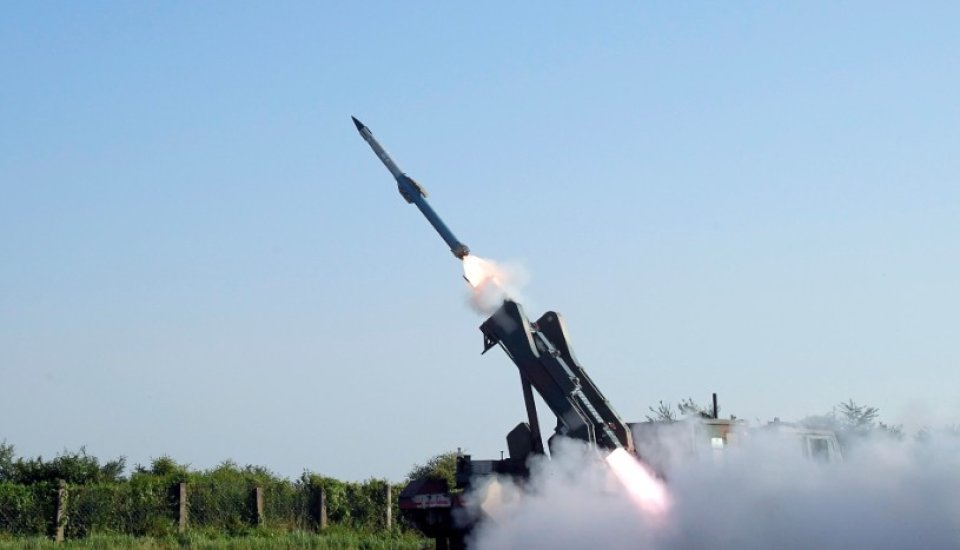
The Defence Research and Development Organisation (DRDO) conducted the test from Dr APJ Abdul Kalam Island off the coast of Odisha on July 23.
During the trial, the missile successfully intercepted an electronic target simulating a high-speed, high-altitude aerial threat, according to an official statement issued by India’s Ministry of Defence.
Kusha is designed to neutralise a range of aerial threats, including fighter aircraft, missiles, unmanned aerial vehicles and larger airborne platforms across varying ranges and altitudes.
DRDO said the missile, radar, command-and-control centre and other components of the system were developed by its laboratories in partnership with Indian industries. The programme is consequently expected to give India greater control over production, maintenance, technological upgrades and the availability of replacement missiles.
Indian Defence Minister Rajnath Singh described the successful test as an important milestone in the country’s defence research and development. He said the programme demonstrated India’s ability to develop a long-range surface-to-air missile system—a capability possessed by only a limited number of countries.
The system is also expected to complement India’s existing air defence platforms. A multilayered network generally combines long-range systems with short- and medium-range platforms, allowing each layer to respond to different types of aerial threats.
Defence analysts say such networks have become increasingly important as countries seek to protect airports, power-generation facilities, transport systems, military installations and other critical infrastructure from missiles, aircraft and increasingly sophisticated drones.
According to Indian media reports, the Kusha programme is expected to include interceptor variants intended for different operational ranges. Its phased induction is reportedly planned between 2028 and 2030, subject to the completion of further developmental and operational trials.
Kusha is also expected to contribute to Mission Sudarshan Chakra, India’s planned national security shield announced by Prime Minister Narendra Modi in August 2025. The initiative aims to expand protection for public spaces, civilian infrastructure and strategically important facilities by 2035.
Modi has said the research, development and manufacturing associated with the mission should be undertaken domestically, making technological self-reliance a central part of the programme. The Prime Minister’s Office said the initiative is intended to reinforce India’s strategic autonomy and provide rapid and precise responses to emerging security challenges.
Further trials will be required before Kusha enters operational service. However, its successful maiden test represents an important step towards India developing a nationally produced long-range air defence capability and strengthening its wider defence-manufacturing ecosystem. (Source: South China morning post)