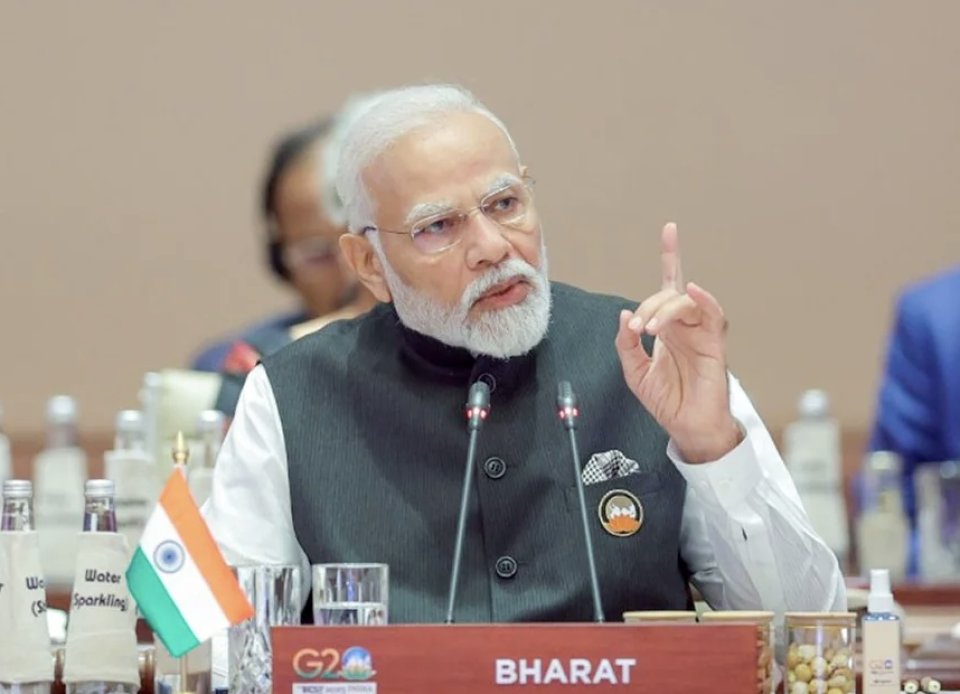

Indian Prime Minister Narendra Modi’s recent tour of Indonesia, Australia and New Zealand has reinforced India’s growing role in the Indo-Pacific, combining security cooperation with trade, technology and development partnerships at a time of intensifying geopolitical competition across the region.
Modi travelled to the three countries from July 6 to 11, describing the tour as an effort to strengthen India’s Act East Policy, its MAHASAGAR maritime vision and its commitment to a free and open Indo-Pacific.
The journey connected three strategically important parts of the region: Indonesia in Southeast Asia, Australia in the eastern Indian Ocean and South Pacific, and New Zealand in the wider Pacific. More than a series of bilateral engagements, the tour projected India as a country seeking a larger role in shaping the Indo-Pacific’s economic and security architecture.
Indonesia: Strengthening India’s Southeast Asian gateway
In Indonesia, Modi held talks with President Prabowo Subianto covering defence, maritime security, trade, digital infrastructure, artificial intelligence, critical minerals, energy, agriculture, healthcare and space cooperation.
As two major maritime countries positioned on important Indian and Pacific Ocean routes, India and Indonesia reaffirmed their commitment to expanding defence exercises, information-sharing, hydrographic cooperation, military training and defence production.
The leaders also supported closer cooperation between the ASEAN Outlook on the Indo-Pacific and India’s Indo-Pacific Oceans Initiative. Significantly, they backed further use of the India–Indonesia–Australia trilateral framework in areas such as maritime-domain awareness, the blue economy and marine pollution. India–Indonesia joint statement
The visit also demonstrated that India’s regional outreach is not confined to military relations. Agriculture, food security, pharmaceuticals, digital public infrastructure, telecommunications and cultural cooperation were prominently included.
India reportedly agreed to supply Indonesia with BrahMos cruise missiles and Astra air-to-air missiles under an estimated USD 630 million defence package. If implemented as announced, the agreement would significantly expand India’s emergence as a defence supplier in Southeast Asia. Reuters report
Australia: A stronger maritime and security partnership
In Australia, Modi and Prime Minister Anthony Albanese convened the third India–Australia Annual Summit and announced a new Joint Declaration on Defence and Security Cooperation.
The two countries agreed to establish an annual dialogue between their defence ministers and strengthen military coordination, information-sharing, capacity-building and defence-industry links. A Maritime Security Collaboration Roadmap and cooperation arrangement between the Indian Coast Guard and Australia’s Maritime Border Command were also announced.
The growing India–Australia partnership is important because both countries sit astride vital sea routes connecting the Indian and Pacific Oceans. Australia is also a member of the Quad alongside India, Japan and the United States.
Despite this security dimension, the partnership extends to trade, investment, education, critical technologies and mobility. This allows India to deepen its strategic alignment with Australia without presenting the relationship solely as a military arrangement. India–Australia summit statement
Historic opening with New Zealand
The final stop in New Zealand carried particular diplomatic significance, marking the first visit by an Indian prime minister in 40 years.
India and New Zealand elevated their relationship to a Strategic Partnership and adopted a Roadmap to 2030. The two sides also concluded a free-trade agreement and set an aspirational target of doubling two-way trade in goods and services to NZD 7 billion by 2030.
Their agreements covered maritime cooperation, naval exercises, hydrography, logistical support, counterterrorism, cybersecurity, agriculture, tourism, education and sport. An annual Maritime Security Dialogue will also be established.
The visit brought New Zealand more closely into India’s Indo-Pacific network while retaining a strong focus on commercial and development opportunities. India–New Zealand joint statement
India positions itself between competing power centres
The Indo-Pacific has become the principal arena of strategic competition between China and the United States. Disputes in the South China Sea, military activity around Taiwan, competition over Pacific island states and concerns about control of critical supply chains have increased regional tensions.
Against this background, Modi’s tour expanded India’s strategic footprint without formally placing New Delhi inside a US-led alliance structure.
India cooperates closely with the United States, Australia and Japan through the Quad, while maintaining relations with China through forums such as BRICS and the Shanghai Cooperation Organisation. It also continues longstanding defence and energy links with Russia.
This strategic autonomy differentiates India from traditional alliance-based powers. New Delhi is presenting itself as an independent Indo-Pacific partner capable of working with ASEAN members, Western countries, Indian Ocean states and Pacific nations according to shared interests.
China was not directly targeted in the official outcomes of the tour. Nevertheless, stronger Indian defence, maritime and technological ties with Indonesia and Australia will inevitably be viewed within the context of China’s expanding economic and military presence.
Peace supported through capacity and connectivity
India’s argument is that regional peace cannot be separated from development. Secure shipping routes, resilient supply chains, digital connectivity, food and energy security, disaster-response capacity and access to investment all contribute to political stability.
This approach is particularly relevant to smaller Indian Ocean and Pacific island countries, including the Maldives, which depend heavily on uninterrupted maritime commerce and stable relations among larger powers.
For these states, the preferred Indo-Pacific order is not one dominated by confrontation or exclusive blocs, but one that preserves sovereignty, freedom of navigation and access to multiple development partners.
Modi’s tour demonstrated that India intends to compete for influence through a mixture of defence cooperation, trade, technology, culture and capacity-building. It also showed that New Delhi’s regional ambitions now stretch beyond its immediate Indian Ocean neighbourhood.
The long-term significance of the tour will depend on whether the agreements are implemented. However, the political message was already clear: India wants to be recognised not merely as a South Asian power, but as an Indo-Pacific actor capable of contributing to the region’s security, stability and development. (Source: news syndicate)