
For much of the past two decades, discussions about India focused primarily on its economic potential. Today, that conversation has broadened significantly. India is increasingly being viewed not only as one of the world's fastest-growing major economies but also as a country seeking a larger role in global governance, diplomacy and strategic affairs.
Whether measured through economic performance, diplomatic engagement, participation in multilateral institutions or influence in emerging technologies, India's international profile has expanded considerably. At the same time, greater global influence brings greater expectations and responsibilities, requiring countries to balance national interests with international cooperation in an increasingly complex geopolitical environment.
The economic story remains one of India's strongest assets. International institutions continue to project India as the fastest-growing major economy despite global uncertainty. The International Monetary Fund projects India's economy to grow by around 6.5 percent in 2026, while describing the country as one of the principal drivers of global economic growth. The World Bank has similarly maintained that India remains among the fastest-growing major economies, supported by strong domestic demand, infrastructure investment and digital transformation.
India's economic rise has also translated into greater influence in international affairs. According to the World Bank, the country's share of global economic output has more than doubled over the past two decades, strengthening its position in discussions on trade, investment, development and global financial governance.
Beyond economics, India has steadily expanded its diplomatic engagement across multiple regions. Its foreign policy has increasingly focused on maintaining constructive relations with a diverse range of partners, including the United States, Europe, Russia, the Middle East, Southeast Asia and Africa. Rather than aligning exclusively with any single geopolitical bloc, New Delhi has continued to pursue what it describes as strategic autonomy, allowing it to cooperate with multiple partners while maintaining an independent foreign policy.
This diplomatic approach has enabled India to remain engaged across competing geopolitical interests even during periods of heightened international tension. It has also positioned itself as an advocate for the interests of developing countries, particularly through initiatives focusing on digital public infrastructure, climate finance, food security and reforms to international financial institutions.
India's presidency of the G20 highlighted this approach by placing considerable emphasis on the concerns of developing economies while advancing discussions on sustainable development, digital transformation and inclusive economic growth. Many analysts viewed the presidency as an opportunity for India to demonstrate its ability to build consensus among countries with differing political and economic priorities.
Within the United Nations, India has become one of the organisation's most active contributors. It has served eight terms as a non-permanent member of the UN Security Council and remains among the largest cumulative contributors to United Nations peacekeeping operations. Indian peacekeepers have participated in dozens of missions across Africa, Asia and the Middle East over several decades, reinforcing the country's long-standing commitment to international peace and security.
At the same time, India has consistently advocated for reform of the UN Security Council, arguing that the institution should better reflect today's geopolitical realities. New Delhi maintains that the current structure, established after the Second World War, no longer adequately represents the world's population or economic balance. While Security Council reform remains politically complex, India's expanding economic size, population and diplomatic engagement have strengthened its case for a larger role within the UN system.
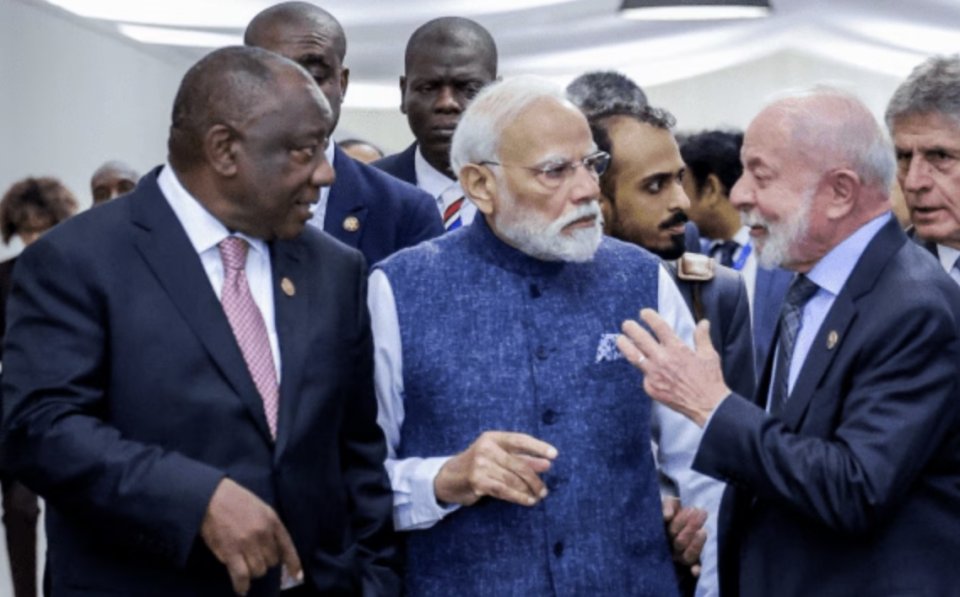
India has also broadened its participation in multilateral organisations and strategic groupings. It is an active member of the G20, BRICS, the Shanghai Cooperation Organisation and the Quad, while continuing to deepen engagement with ASEAN, the Indian Ocean Rim Association and several other regional forums. Participation across these diverse platforms reflects India's effort to engage with multiple centres of global influence while promoting dialogue on security, trade, connectivity and sustainable development.
Technology has become another important pillar of India's international standing. The country's digital transformation, supported by digital identity systems, instant payment platforms and expanding public digital infrastructure, has attracted growing international attention. Several countries are now studying elements of India's digital governance model as they develop their own digital public services. India's growing technology sector, supported by innovation in artificial intelligence, semiconductors, renewable energy and advanced manufacturing, has further strengthened its global economic profile.
India's achievements in space exploration have similarly enhanced its international reputation. Missions undertaken by the Indian Space Research Organisation have demonstrated the country's ability to undertake sophisticated space programmes at comparatively lower costs, attracting greater international collaboration in scientific research, satellite launches and commercial space services.
Geography has also contributed significantly to India's strategic importance. Located at the centre of the Indian Ocean, the country occupies a position that is increasingly important to global trade, maritime security and energy transportation. As geopolitical attention shifts towards the Indo-Pacific, India has expanded cooperation with regional and international partners on maritime security, disaster response, humanitarian assistance and freedom of navigation.
Despite these achievements, India's continued rise also faces important challenges. Sustaining high economic growth while creating sufficient employment opportunities, improving infrastructure, reducing inequality and enhancing human development indicators remains essential to maintaining long-term influence. Many analysts argue that durable global leadership depends not only on economic size but also on institutional strength, governance, innovation and the ability to build trusted international partnerships.
The international environment itself has also become increasingly complex. Strategic competition among major powers, supply chain realignments, technological rivalry, climate change and regional conflicts are reshaping global politics and economics. As Harvard economist and former IMF First Deputy Managing Director Gita Gopinath recently observed, geopolitics has become a permanent factor influencing economic policymaking around the world.
Against this backdrop, India appears to be transitioning from being viewed primarily as an emerging economy to becoming an increasingly influential participant in shaping international discussions. Its growing influence is underpinned by economic resilience, demographic scale, expanding diplomatic engagement and technological advancement.
Whether this momentum translates into sustained global leadership will depend on India's ability to continue strengthening its economy, modernising institutions, expanding international partnerships and contributing constructively to addressing shared global challenges. The evidence increasingly suggests that India is no longer recognised solely for its future potential. It is becoming an increasingly consequential stakeholder in the evolving international order, with a growing role in shaping discussions on economic development, global governance, technology, security and international cooperation. (Source: news syndicate)