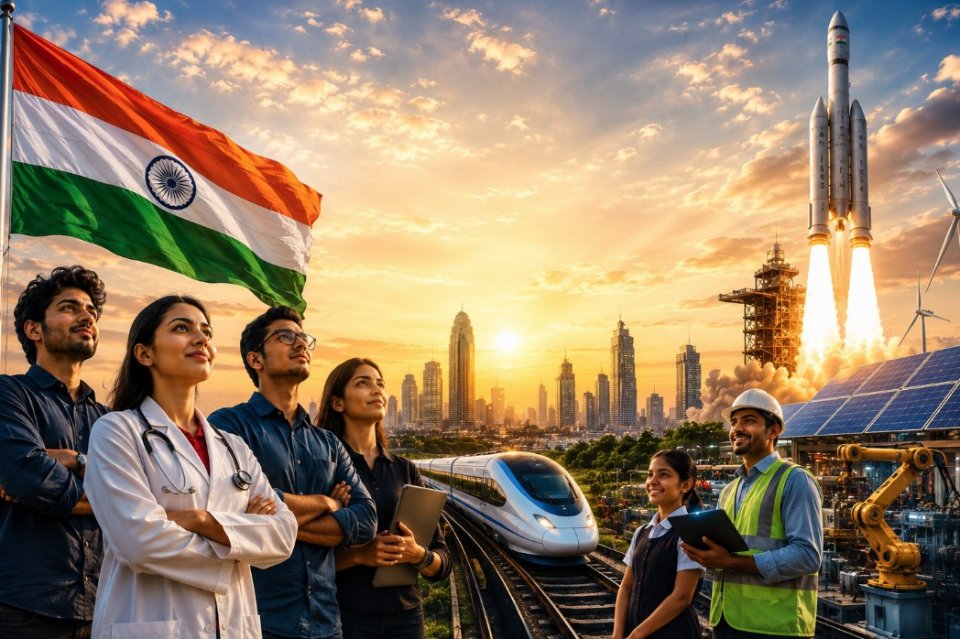

For decades, discussions about India’s future centred on potential. Analysts spoke of demographic advantages, economic opportunities and geopolitical importance, often describing the country as a "rising power." Today, however, the conversation is increasingly shifting from potential to performance.
Recent developments suggest that India’s rise is no longer being driven by economic growth alone. Instead, it is being shaped by a combination of military modernisation, industrial expansion, social development, technological advancement and growing international influence.
One of the clearest examples of this transformation can be seen in India’s defence sector. According to India’s Ministry of Defence, the country’s defence production reached a record ₹1.78 lakh crore (approximately US$20.7 billion) during the 2025-26 financial year, representing a 15.6 percent increase over the previous year and more than double the level recorded in FY 2020-21. Defence exports also reached a record ₹38,424 crore (approximately US$4.5 billion), highlighting India’s growing presence in international defence markets.
These achievements are closely linked to the government’s emphasis on indigenous manufacturing and the "Atmanirbhar Bharat" (Self-Reliant India) initiative. A decade ago, India was largely viewed as one of the world's largest importers of defence equipment. Today, it is increasingly positioning itself as a producer and exporter of military technology.
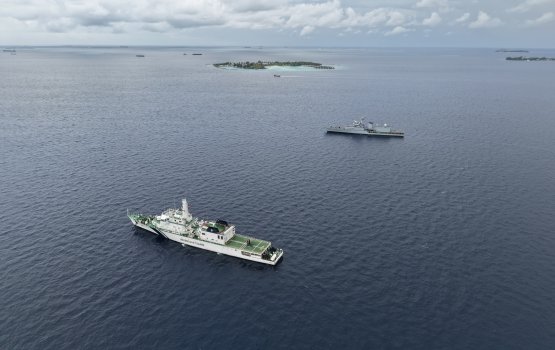
This shift was symbolically reinforced by Prime Minister Narendra Modi’s commissioning of three indigenous naval platforms into the Indian Navy in June 2026. The induction of these vessels reflects India's growing capability to design, build and deploy advanced maritime assets domestically. In a region where maritime security and freedom of navigation are becoming increasingly important, such developments strengthen India’s role as a key security actor in the Indian Ocean.
Military alone does not define a nation’s success
What distinguishes India’s recent progress is that improvements in defence and industrial capacity are being accompanied by advances in human development. According to findings from the latest National Family Health Survey (NFHS-6), India has recorded improvements across several key healthcare indicators. Institutional deliveries have increased to more than 90 percent, while access to antenatal care and childhood immunisation has also expanded significantly.
These improvements are particularly important because they reflect investments in long-term human capital rather than short-term economic gains. Healthier mothers, healthier children and stronger healthcare systems contribute directly to productivity, educational attainment and economic resilience.
The survey also highlights progress in women's empowerment and financial inclusion. According to NFHS-6 findings, internet usage among women has risen substantially over the past decade, while ownership of bank accounts and mobile phones has continued to increase. Such developments provide greater access to financial services, information and economic opportunities, particularly in rural communities.
The digital transformation underway in India further strengthens this trajectory. Through initiatives such as Aadhaar, Unified Payments Interface (UPI) and a growing digital public infrastructure ecosystem, India has demonstrated how technology can be used at scale to improve service delivery and financial inclusion. International institutions, development agencies and governments around the world have increasingly pointed to India's digital infrastructure as a model for developing economies.
India’s growing influence is also becoming more visible on the global stage. The country has emerged as an increasingly important voice for developing nations, particularly through platforms such as the G20, BRICS and the Global South initiatives. Its ability to engage simultaneously with Western powers, Gulf nations, Africa and Southeast Asia has enhanced its diplomatic flexibility and strategic relevance.
Recent geopolitical developments further underscore India's expanding international standing. While several countries continue to compete for influence across regions such as Africa and the Indian Ocean, India’s approach has increasingly focused on long-term partnerships built around development cooperation, capacity building, infrastructure, healthcare and technology.
For countries in the Indian Ocean region, including the Maldives, India’s progress carries particular significance. India remains one of the Maldives’ closest development partners, contributing to healthcare, education, infrastructure development, emergency assistance and capacity-building programmes. As India’s economic and technological capabilities continue to expand, its ability to support regional development and stability is also likely to grow.
This does not mean that India’s challenges have disappeared. The country continues to face issues related to poverty, unemployment, urban congestion, environmental sustainability and regional disparities. These remain significant policy challenges that will require sustained attention and reform.
However, it is equally important to recognise the broader trend. Few countries have managed to simultaneously expand defence production, strengthen maritime capabilities, improve healthcare outcomes, advance women's empowerment, build world-class digital infrastructure and increase their international influence within such a short period.
The significance of India’s rise lies not in any single statistic or achievement. Rather, it lies in the convergence of multiple forms of progress occurring at the same time.
For years, the world discussed whether India would emerge as a major global power. Increasingly, the evidence suggests that the process is already underway.
Sources: India Ministry of Defence (FY 2025-26 Defence Production and Export Data); National Family Health Survey (NFHS-6); Government of India statements on indigenous naval platforms and digital public infrastructure initiatives.