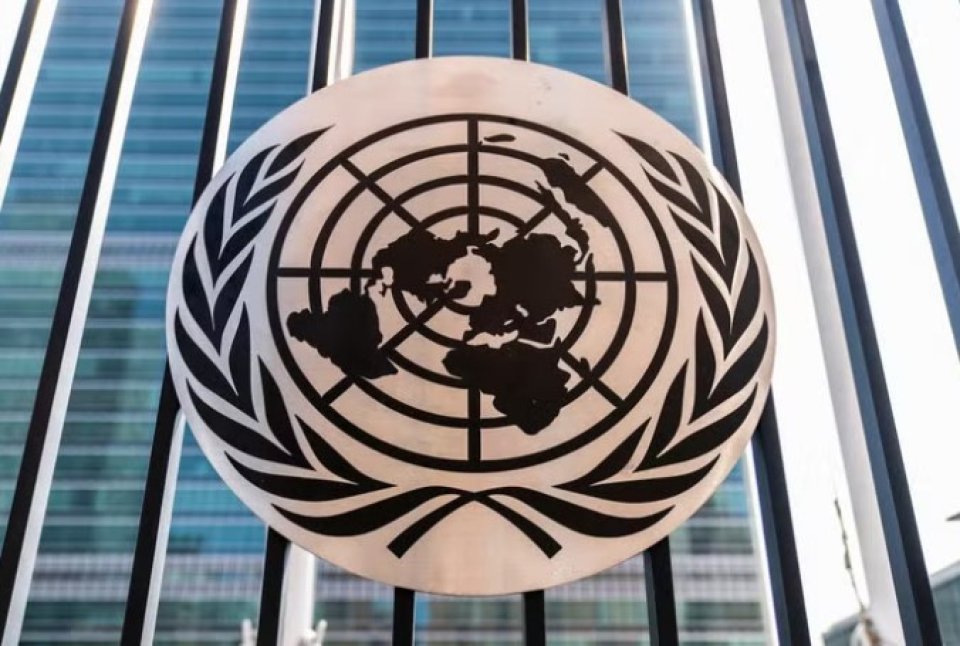
Bratislava: Slovakia has reaffirmed its support for India’s bid for permanent membership in a reformed United Nations Security Council (UNSC), as the two countries elevated bilateral relations to a Comprehensive Partnership during Prime Minister Narendra Modi’s visit to the Central European nation.
The commitment was outlined in a joint statement issued following talks between Prime Minister Modi and Slovak Prime Minister Robert Fico on Monday.
Both leaders underscored the need for comprehensive reforms of global institutions, including the United Nations and the Security Council, to ensure they are more representative, inclusive and reflective of contemporary geopolitical realities.
The two sides stressed the importance of expanding the Security Council in both permanent and non-permanent categories. India welcomed Slovakia’s continued support for its permanent membership in an expanded and reformed UNSC.
India has long advocated for reforms to the 15-member Security Council, arguing that its current structure no longer reflects modern global realities. New Delhi’s bid has gained support from an increasing number of countries, including several European nations and fellow G4 members Brazil, Germany and Japan.
During the talks, India and Slovakia also reaffirmed their commitment to multilateralism and agreed to strengthen coordination within the United Nations and other international forums.
Slovakia further reiterated its constructive support for India’s membership in the Nuclear Suppliers Group (NSG), a key multilateral export control regime governing nuclear trade.
Prime Minister Modi’s visit marked the first by an Indian prime minister to Slovakia since the country gained independence in 1993. The newly announced Comprehensive Partnership aims to deepen cooperation in strategic affairs, trade, technology, security and innovation.
The two leaders also reaffirmed support for a free, open and rules-based Indo-Pacific, respect for international law and freedom of navigation.
On security matters, India and Slovakia strongly condemned terrorism in all its forms, including cross-border terrorism. They also condemned the April 2025 terrorist attack in Pahalgam, Jammu and Kashmir, which claimed 26 lives.
To strengthen counter-terrorism cooperation, both countries agreed to establish a Joint Working Group on Counter-Terrorism and called for stronger action against individuals and entities designated under the UN Security Council’s sanctions framework.
The two nations also pledged closer collaboration in defence technologies, research and development, capacity building and defence industrial cooperation, welcoming the signing of a Letter of Intent on Defence Cooperation.
Cybersecurity emerged as another key area of cooperation, with both sides agreeing to strengthen efforts to protect critical information infrastructure, combat cybercrime and prepare for emerging quantum-era security challenges.
Welcoming progress in negotiations on the India-European Union Free Trade Agreement, the leaders called for its early conclusion and implementation to unlock greater trade and investment opportunities between India and Europe.